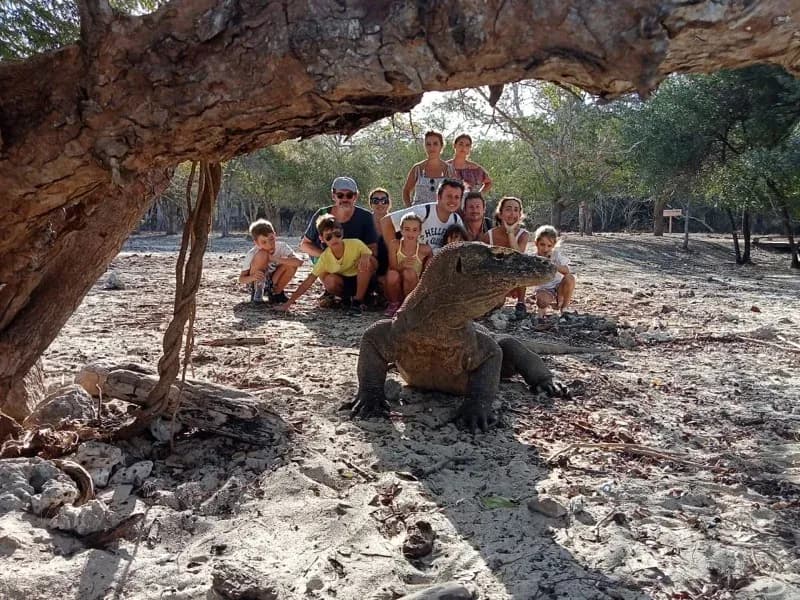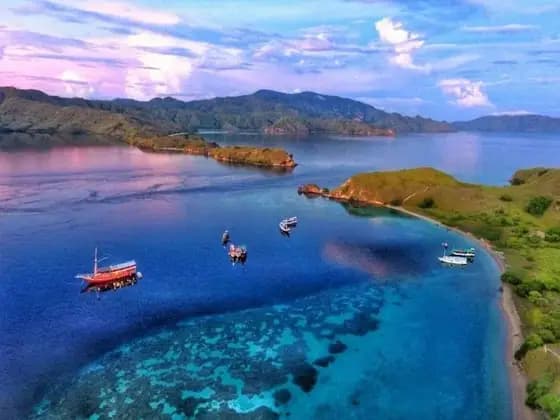

Liveaboard-dykking i Komodo i 2026 tilbyr en unik blanding av ville vulkanske vegger, krystallklare strømmer og et undervannsliv som kan måle seg med de beste tropiske revene. I løpet av bare noen få dager om bord på en yacht i Phinisi-stil vil du gli forbi bratte undersjøiske vegger, drive gjennom stimer av barracudaer, og komme til overflaten på fjerne øyer hvor duften av frangipani blandes med salte sjøbris. Denne guiden samler min erfaring på vannet til praktiske råd, detaljerte beskrivelser av dykkestedene og en steg-for-steg plan for bestilling, slik at kan starte din liveaboard-tur til Komodo med selvtillit.
| Element | Detaljer |
|---|---|
| Beste sesong | April – oktober (tørrsesong, optimale strømforhold) |
| Vanlig varighet liveaboard | 4 – 7 netter |
| Gjennomsnittlige dykk per dag | 4 – 5 per dag (inkl. nattdykk) |
| Topp dykkedybder | 15 – 40 m (opp til 50 m ved Castle Rock) |
| Karakteristiske arter | Manta birostris, Hvalhai, Hippocampus (rørnål), Acanthaster (tornekrone), Pterois (løvefisk) |
| Anbefalt sertifisering | Advanced Open Water (AOW) eller høyere; Nitrox valgfritt |
| Vanlig prisklasse | US$1,800 – US$3,200 per person (inkl. måltider, guide, utstyr) |
| Avreisested | Labuan Bajo, Flores (FLN) |
| Viktige operatører | Komodo Explorer, Bali Hai, Ari’s Phinisi |
Komodos undervannslandskap leser seg som en geologisk lærebok. Vulkansk heving har formet bratte basaltvegger som stupar ned i Bandahavet, mens den indonesiske gjennomstrømningen skaper en evigvarende transportbånd av næringsrikt vann. Resultatet er et revsystem hvor småkryp blomstrer side om side med pelagiske kjemper. På en liveaboard-tur til Komodo vil du tilbringe nettene ankret opp i avsides bukter, og våkne til sollys som forvandler vannet til et lysende turkis – perfekt for å spotte sky blekksprut og en og annen manta som glir rett under overflaten.
Som en erfaren dykkguide med over 2 000 dykk i de mindre Sunda-øyene, kan jeg forsikre deg om at Komodos liveaboard-opplevelse er både spennende og trygg. Phinisi-yachtene er bygget for revets robuste forhold, med forsterkede skrog, stabiliserende gyroer og et erfarent mannskap som kjenner hver eneste tidevannsstrøm og virvel. Min rolle er å oversette denne ekspertisen til en reiserute som maksimerer møter med det marine livet, samtidig som vi viser respekt for det skjøre økosystemet.
| Måned | Vær | Strømstyrke | Vanlig sikt |
|---|---|---|---|
| April – Mai | Varmt, lav fuktighet | Moderat (0,5–0,8 kn) | 20–30 m |
| Juni – August | Tørt, kjølige briser | Sterk (0,8–1,2 kn) – best for strømdykking | 25–35 m |
| September – Oktober | Overgang, av og til regnbyger | Moderat | 20–30 m |
| Fartøy | Kapasitet | Lugarer | Fasiliteter | Hvorfor det passer en dykketur |
|---|---|---|---|---|
| Komodo Explorer Phinisi | 12 | 6 dobbelt | Air‑condition, solcelledrevet kjøkken, dykkeskap | Ideelt for små grupper, intime briefingsrom |
| Bali Hai Classic | 20 | 10 dobbelt | Spa‑inspirerte dusjer, Wi‑Fi, dykkebutikk om bord | Bra for familier eller større grupper |
| Ari’s Heritage | 16 | 8 dobbelt | Treinteriører, tradisjonelle navigasjonsinstrumenter | Perfekt for kulturinteresserte som søker autentisk seiling |
Innsidertips: Spør operatøren om deres politikk for dekompresjonskammer og om de har med seg en portabel hyperbarisk enhet – et spørsmål som skiller erfarne operatører fra resten.
Hva du vil se: En vertikal vegg av rosa korall, hjem til Acropora-kolonier, kjempekamskjell (Tridacna) og av og til Mola mola (klumpfisk) som kommer til overflaten ved daggry.
Hvorfor det er viktig: Veggens bratthet skaper en “veggstrøm” hvor strømmen suser forbi, noe som gjør det til en perfekt treningsplass for nøytral oppdrift.
Innsidertips: Dykk mellom 08:00‑10:00 når solen treffer veggen i en lav vinkel, noe som forvandler vannet til et gyldent tablå som fremhever korallens røde og oransje farger.
Hva du vil se: En massiv basaltmonolitt med et massivt “hule”-inngang, ofte besøkt av Manta birostris under mating, og av og til revhaier (Carcharhinus spp.).
Dybdeangivelser: Hovedkorridoren “Manta Corridor” ligger på 30 m; en valgfri nedstigning langs dypveggen når 45 m for erfarne dykkere.
Beste tid: Tidlig høyvann når strømmen skyver plankton inn i berghulene, noe som tiltrekker seg mantaer.
Hva du vil se: Store, yndige mantaer som samles for å bli renset for parasitter. Å oppdage en ung Rhincodon typus (hvalhai) er ikke uvanlig i tørrsesongen.
Praktisk tips: Bruk en langsom, jevn svømmestil; mantaer tiltrekkes av den milde bevegelsen fra en dykkes finner.
Hva du vil se: En sjelden strekning med rosa sand dannet av knust korall, omgitt av grunt rev fullt av dvergsjøhester (Hippocampus bargibanti) og nakensnegler.
Hvorfor det er spesielt: Sandens farge gjenspeiler solen sent på ettermiddagen, noe som skaper en surrealistisk fotomulighet.
Tips: Ta med et makroobjektiv; de små krypene fanges best på 1–2 m avstand.
Hva du vil se: Nattlige oppblomstringer av plankton, lysende Pterois (løvefisk), og av og til Myrmidon (bløtkorall) som gløder under lommelykten.
Sikkerhetsnotat: Nattdykk gjennomføres med minimum to guider, og en overflatebøye er obligatorisk.
Tørrsesongen fra april til oktober tilbyr det klareste vannet og sterkeste strømmer, noe som er ideelt for strømdykking og møter med mantaer. Juli og august er spesielt verdsatt for sin konstante bølgegang og rike tilfang av plankton.
De fleste reiseruter planlegger 4‑5 dykk per dag, inkludert et nattdykk den tredje eller fjerde natten. Det nøyaktige antallet avhenger av vær, sjøtilstand og mannskapets vurdering av dykkernes tretthet.
Et Advanced Open Water (AOW)-sertifikat er minimumskravet for de fleste steder, spesielt de dypere enn 30 m. For dypveggen ved Castle Rock (opp til 45 m) anbefales en Rescue Diver- eller Dive Master-sertifisering. Nitrox er valgfritt, men kan arrangeres på de fleste Phinisi-fartøy.
Du kan forvente å møte mantaer, hvalhaier, revhaier, skilpadder, blekkspruter, dvergsjøhester og et fortryllende utvalg av makroliv som nakensnegler og sjeldne korallarter. Sesongbaserte observasjoner kan også inkludere manta-mating og av og til delfinflokker.
Ja, så lenge du følger guidens sikkerhetsprotokoller. Nattdykk gjennomføres vanligvis med to guider, en overflatebøye og en streng dybdegrense