Skip to content
Komodo Explorer
STRONA GŁÓWNA

Uzyskaj swój niestandardowy program

Zaplanuj swoje marzenie podróży Komodo w zaledwie 2 minuty. Porozmawiaj z naszym ekspertem podróży, aby uzyskać spersonalizowany program.

Poproś przez WhatsApp
WhatsAppZadzwoń terazMessengerWyślij e-mail

Komodo Explorer

Doświadcz szczytu indonezyjskiego luksusu morskiego z naszą premium flotą phinisi

Skontaktuj się z nami

Headquarters

Jl. Mutiara, Labuan Bajo, East Nusa Tenggara

Bali Office

Jl. Kerta Dalem Sari IV, Denpasar, Bali
+62 851-9009-6797
info@komodoexplorer.com

Szybkie linki

  • Strona główna
  • Private Charter Trip
  • Open / Share Trip
  • Day Cruise
  • Lombok - Komodo
  • Dive Cruise
  • Destinations
  • Travel Blog
  • Explore
  • Gallery
  • O nas
  • Review Methodology
  • By the Numbers
  • Press
  • Safety Facts
  • FAQ
  • Kontakt
  • Site Map

Zaufanie i płatność

ASITA
Wonderful Indonesia

ASITA Member: 074/XIX/DPP/2022

Bezpieczni partnerzy płatności

Visa Mastercard
Pay Now

Browse Our Fleet

Private Charter
  • abizar
  • al madira semi phinisi
  • alfatran phinisi
  • amalfi phinisi
  • arfisyana phinisi
  • athira boat
  • atimon
  • ayla boat
Open Trip
  • 3 island
  • adishree phinisi
  • ahsana
  • aimar phinisi
  • amalia phinisi
  • andalusia phinisi
Dive Cruise
  • andamari phinisi
  • cajoma v phinisi
  • cheng ho
  • fenides phinisi
  • kaia liveaboard
Day Cruise
  • east cruise fast boat
  • kaia explorer
  • komodo surga bahari
  • la sukha speed boat
  • mac cruise speed boat
Lombok - Komodo
  • arumi phinisi
  • eternity phinisi
  • lady grace phinisi
  • lwsk alfatran phinisi

Top Destinations

  • Bidadari Island
  • Kanawa Island
  • Kelor Island
  • Manjarite Snorkle Spot
  • Sebayur Island
  • Kalong Island
  • Labuan Bajo
  • Gili Lawa
  • Komodo Island
  • Manta Point
  • Padar Island
  • Pink Beach
  • Taka Makasar

© 2026 PT. Komodo Explorer Indonesia. Wszelkie prawa zastrzeżone.

Privacy PolicyTerms & Conditions

Global Service Regions

  • Luxury Phinisi Charter EN
  • Luxury Phinisi Charter ID
  • Luxury Phinisi Charter ZH-CN
  • Luxury Phinisi Charter ZH-TW
  • Luxury Phinisi Charter JA
  • Luxury Phinisi Charter KO
  • Luxury Phinisi Charter MS
  • Luxury Phinisi Charter HI
  • Luxury Phinisi Charter RU
  • Luxury Phinisi Charter DE
  • Luxury Phinisi Charter FR
  • Luxury Phinisi Charter ES
  • Luxury Phinisi Charter IT
  • Luxury Phinisi Charter NL
  • Luxury Phinisi Charter PT-BR
  • Luxury Phinisi Charter AR
  • Luxury Phinisi Charter TH
  • Luxury Phinisi Charter VI
  • Luxury Phinisi Charter PL
  • Luxury Phinisi Charter TR
  • Luxury Phinisi Charter SV
  • Luxury Phinisi Charter DA
  • Luxury Phinisi Charter NO

Browse by Trip Duration

  • 2 Days 1 Night Komodo Charter
  • 2 Days 1 Night Komodo Dive Cruise
  • 3 Days 2 Nights Komodo Charter
  • 3 Days 2 Nights Komodo Open Trip
  • 3 Days 2 Nights Komodo Dive
  • 4 Days 3 Nights Lombok-Komodo
  • 4 Days 3 Nights Komodo Dive Cruise

Browse by Vessel Feature

  • Komodo Charter with Jacuzzi
  • Komodo Charter with Wi-Fi Onboard
  • Komodo Charter with Spa
  • Komodo Charter with Glass Bottom
  • Komodo Charter with Gym
  • Komodo Charter with Cinema

Browse by Marine Life

  • Komodo Charter Whale Shark Watching
  • Lombok-Komodo Whale Shark Cruise
  • Komodo Charter Dolphin Watching
  • Komodo Dive Cruise Dolphin Spotting
  • Beginner-Friendly Komodo Charter
  • Beginner-Friendly Dive Cruise
  • Advanced Diving Komodo Charter
  • Advanced Diving Cruise

Browse by Group Size

  • Komodo Charter for Two
  • Intimate Komodo Charter
  • Boutique Komodo Charter
  • Group Komodo Charter
  • Intimate Open Trip
  • Group Open Trip
  • Intimate Dive Cruise
  • Group Dive Cruise

Browse by Departure & Journey

  • Komodo Charter from Bali
  • Komodo Dive Cruise from Bali
  • Komodo Charter from Lombok
  • Lombok to Komodo Cruise
  • Komodo to Lombok Cruise
  • Wedding at Sea Komodo
  • Babymoon Komodo Cruise
  • Anniversary Komodo Charter
How Komodo Dragons Reproduce: Parthenogenesis Explained
Destination Guide

How Komodo Dragons Reproduce: Parthenogenesis Explained

  1. Home
  2. ›
  3. Journal
  4. ›
  5. How Komodo Dragons Reproduce: Parthenogenesis Explained
hosea-titi-sanjaya2 czerwca 2026

How Do Komodo Dragons Reproduce? (Parthenogenesis Explained)

Komodo dragon reproduction is a blend of ancient ritual and modern science: females lay clutches of up to 30 eggs after a brief courtship, and in rare cases they can produce offspring without a male through a process called parthenogenesis. This phenomenon, first documented in the wild in 2014, shows that even the world’s largest lizards carry a hidden genetic trick.

Key Facts

Fact Detail
Scientific name Varanus komodoensis
Mating season May – October (dry season)
Egg incubation 8 – 9 months, 30–32 °C
Clutch size 15 – 30 eggs
Parthenogenesis First wild case 2014, confirmed 2021
Conservation status Endangered (IUCN)
Key locations Komodo Island, Rinca Island, Padar Island
Typical nest depth 0.5 – 1 m in sandy soil

The Cycle of Komodo Dragon Reproduction

Komodo dragons are ectothermic apex predators that rely on the island’s hot, dry climate to regulate their body temperature. Their reproductive cycle is tightly linked to the seasonal rhythm of the Lesser Sunda Islands.

1. Courtship and Mating

When the dry season begins in May, the air over Komodo Island carries the faint scent of salt‑laden sea breezes and the distant rumble of surf. Males, often larger and more robust than females, patrol territories marked by fresh dung and the occasional broken twig. The courtship ritual is a low‑key affair:

  • Visual display – The male raises his head, expands his throat pouch, and performs a slow, deliberate sway. The sound of his heavy footfalls on the volcanic ash‑covered ground echoes like distant drums.
  • Chemical signaling – Females release a pheromone that drifts on the wind, detectable only to a dragon’s highly tuned Jacobson organ.
  • Physical contact – The male circles the female, occasionally nudging her with his snout. If she accepts, they engage in a brief, almost choreographed “mount” that lasts 30 – 45 minutes.

Practical tip: The best time to witness this dance is early morning, just after sunrise, when the island’s light is a soft amber and the temperature is still below 30 °C. Operators on Phinisi yachts often ask guides, “Will we see any courtship this week?” – a good question to gauge the likelihood of a live encounter.

2. Egg Laying (Oviposition)

Within a few weeks after mating, the female seeks a secluded nesting site. Preferred locations are:

  • Sandy dunes on the leeward side of Rinca Island, where the substrate is loose enough to dig but compact enough to retain moisture.
  • Rocky crevices beneath the shade of Padar’s wind‑bent trees, where the temperature remains stable.

The female uses her powerful claws to excavate a shallow pit, typically 0.5 – 1 m deep. She then deposits 15 – 30 eggs, each the size of a grapefruit, and covers them with sand and leaf litter. The nest’s microclimate—maintained by the sun’s steady heat and the island’s low humidity—keeps the eggs at an incubation temperature of 30–32 °C.

Insider tip: Ask your charter operator whether the crew has a “nest‑watch” program. Some Phinisi captains coordinate with park rangers to monitor nests for predation, offering guests a rare chance to observe hatchlings emerging at night.

3. Incubation and Hatching

Incubation lasts 8 – 9 months. During this period, the eggs are vulnerable to:

  • Temperature fluctuations – Too hot, and embryos may die; too cool, and development stalls.
  • Predators – Monitor lizards, birds, and even feral dogs can dig up nests.

The hatchlings break free in late February or early March, emerging into a world of cracked sand and the faint smell of seaweed carried inland. At birth, they are ≈ 30 cm long and already capable of hunting insects and small rodents.

4. Parthenogenesis: The Unseen Reproductive Shortcut

Parthenogenesis—literally “virgin birth”—occurs when a female produces offspring without fertilization. In Komodo dragons, this phenomenon is automictic, meaning the egg’s genetic material duplicates itself.

How It Was Discovered

  • 2014 – A captive female on Komodo Island laid a clutch of 23 eggs after a period of isolation. Genetic testing revealed that 12 of the hatchlings were male, a surprising result given the mother’s lack of a mate.
  • 2021 – Researchers from the University of Zurich captured a wild case on Rinca Island, confirming that the mother’s DNA matched the offspring’s, with no male contribution.

Why It Matters

Parthenogenesis can help maintain a population when males are scarce, but it also reduces genetic diversity, potentially increasing susceptibility to disease. For conservationists, understanding this mechanism informs breeding programs and underscores the importance of protecting both sexes.


Frequently Asked Questions (FAQ)

What is parthenogenesis, and how does it differ from normal reproduction?

Parthenogenesis is a form of asexual reproduction where an egg develops into an embryo without fertilization by sperm. In Komodo dragons, the process is automictic, meaning the egg’s chromosomes duplicate, producing offspring that are genetically similar to the mother. Normal reproduction involves sexual fertilization, where male sperm combines with female egg, creating a unique genetic mix.

How often do Komodo dragons reproduce in the wild?

In the wild, a healthy female typically breeds once every two years, aligning with the island’s dry season. However, not every clutch results in viable hatchlings; predation and environmental factors can reduce success rates to 30 – 40 %.

Can Komodo dragons lay eggs without a male?

Yes, but only through parthenogenesis. This rare event has been documented in both captive and wild populations, producing all‑male or all‑female clutches depending on the genetic mechanism at play. The likelihood of parthenogenesis occurring naturally is low—estimated at < 1 % of all egg‑laying events.

What are the main threats to komodo dragon babies (komodo dragon hatchlings)?

  • Predation – Monitor lizards, birds of prey, and feral dogs.
  • Temperature extremes – Overheating or excessive cooling can halt embryonic development.
  • Human disturbance – Unintentional trampling of nests by tourists.

How can I responsibly observe komodo dragon reproduction on a charter?

  • Choose a reputable Phinisi operator that follows park regulations.
  • Ask about “nest‑watch” opportunities—many operators coordinate with Komodo National Park rangers.
  • Respect distance—maintain at least 30 m from nesting females to avoid stress.
  • Use binoculars rather than approaching on foot; the island’s dry, dusty wind can carry your scent to the dragons.

How to Observe Komodo Dragon Mating in the Wild: A Step‑by‑Step Guide

  1. Plan Your Visit During the Mating Season

    • Book a charter for May‑October. The dry season offers clearer skies and cooler mornings, ideal for spotting activity.
  2. Select the Right Island

    • Komodo Island hosts the largest populations, while Rinca offers quieter nesting sites. Both islands have established guided trek routes.
  3. Coordinate with a Local Guide

    • Ask your charter captain, “Can we arrange a guide from the Komodo National Park office?” Guides know the latest nesting reports and can point you to active territories.
  4. Set Out Early

    • Depart the yacht before 0600 hrs. The early light filters through the mangrove fringe, creating a soft, golden glow that highlights the dragons’ scarred skin.
  5. Listen for the Soundscape

    • The rustle of dry leaves, the distant crash of waves, and the occasional low growl of a male defending his territory give clues to dragon proximity.
  6. Maintain a Safe Distance

    • Keep a minimum of 30 m from any dragon, especially females with eggs. Use a zoom lens (≥ 300 mm) for close‑up photography.
  7. Record Observations

    • Note the time, weather, and behavior (e.g., “male performed head‑bob at 07:12, temperature 28 °C”). This data contributes to ongoing research.
  8. Leave No Trace

    • Pack out all waste, avoid disturbing nests, and follow the “Leave No Trace” principles.

The Science Behind Komodo Dragon Reproduction

Hormonal Regulation

Komodo dragons, like other reptiles, rely on seasonal hormonal cycles. As daylight lengthens, the pituitary gland releases gonadotropins, stimulating the ovaries to produce mature ova. In females, estrogen peaks in late May, triggering ovulation. Males experience a rise in testosterone, increasing aggression and territorial displays.

Genetic Insights

Recent genomic studies have identified sex chromosomes in Komodo dragons (ZZ for males, ZW for females). Parthenogenetic offspring typically inherit ZZ chromosomes, explaining why many parthenogenetic clutches are male. However, occasional ZW outcomes have been recorded, suggesting alternative mechanisms.

Conservation Implications

Understanding komodo dragon reproduction is vital for managing the species’ limited genetic pool. The Komodo National Park employs a captive breeding program that mimics natural conditions—temperature‑controlled incubators, sand substrate, and minimal human interaction—to ensure hatchlings are robust.

Insider tip: When booking a charter, ask the crew, “Do you support the park’s breeding program?” Many operators donate a portion of their fees to conservation initiatives, enhancing the sustainability of your adventure.


Sensory Journey: A Day on the Island

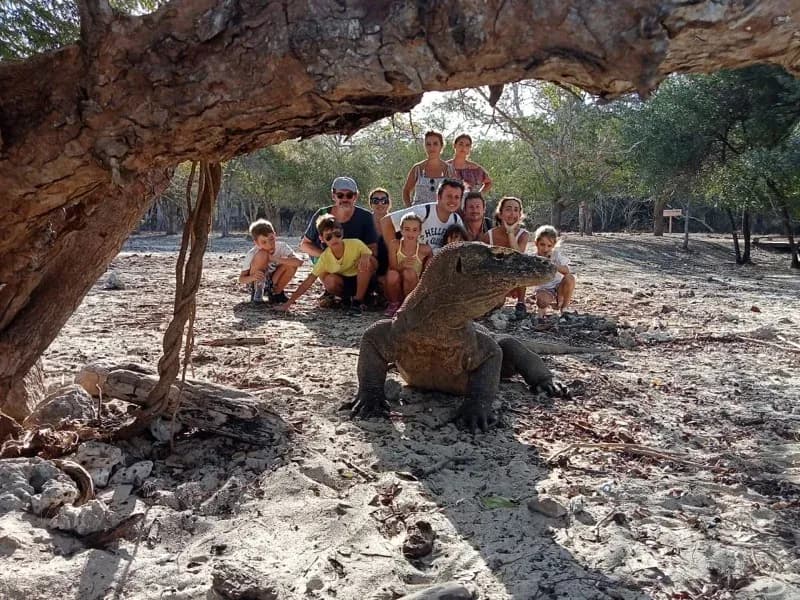
Imagine stepping onto the cracked volcanic ash of Komodo Island at dawn. The air is warm, tinged with the faint scent of seaweed and dry earth. Sunlight glints off the emerald sea in the distance, while the low hum of insects fills the underbrush. Ahead, a massive dragon lies half‑sunken in a shallow sand pit, its scales catching the light like polished bronze. You hear the soft thump of its heart as it moves, a rhythm that mirrors the island’s pulse.

Further along the trail, a female emerges from a hidden burrow, clutching a nest of eggs. The sand around her is warm to the touch, radiating a subtle heat that you can feel on your fingertips. As she turns, a male approaches, his snout brushing the air, releasing a musky odor that hints at his readiness to mate. The scene is a living tableau of komodo dragon reproduction, a process honed over millions of years.


Practical Insider Tips for Travelers

  • Best Time of Day: Early mornings (05:00‑08:00) offer cooler temperatures and heightened dragon activity.
  • Tide Considerations: Low tide reveals more of the shoreline, exposing nests and making boat approaches easier.
  • Questions to Ask Operators:
    • “Do you have recent data on nesting sites?”
    • “Can we join a ranger‑led night watch for hatchling emergence?”
    • “What safety protocols are in place for close encounters?”
  • Equipment Recommendations:
    • Binoculars (8×42) for distant observation.
    • Water‑proof field notebook for recording observations.
    • Sun protection – the island’s UV index can exceed 12.
  • Health Precautions: Carry insect repellent (DEET‑based) and stay hydrated; the dry climate can cause rapid dehydration.

The Role of Phinisi Charters in Conservation

Phinisi yachts are more than luxury vessels; they are mobile research platforms. Many charters partner with local NGOs to:

  • Conduct nest surveys during the breeding season.
  • Transport park rangers to remote islands for anti‑poaching patrols.
  • Provide educational briefings to guests, turning travelers into ambassadors for the Komodo dragon’s future.

When you sail with KomodoExplorer, you’re not just witnessing a spectacle—you’re contributing to a living conservation effort.


Frequently Asked Questions (Continued)

How do climate changes affect komodo dragon reproduction?

Rising temperatures can accelerate egg development, leading to premature hatching or increased mortality. Changes in rainfall patterns affect the availability of suitable nesting sites, as overly wet soils can suffocate embryos.

Are there any legal restrictions on photographing nesting sites?

Yes. Komodo National Park regulations prohibit approaching nests within 30 m and forbid the use of flash lighting at night. Violations can result in fines and removal from the park.

What is the success rate of captive breeding programs?

Captive breeding programs report a hatching success of 70 % when eggs are incubated under controlled temperature and humidity. However, releasing hatchlings back into the wild requires careful genetic screening to avoid inbreeding.


How to Book Your Komodo Dragon Reproduction Expedition

Ready to witness the awe‑inspiring world of komodo dragon reproduction? Our seasoned Phinisi crews will guide you through the islands’ hidden nesting sites, provide expert commentary, and ensure a safe, unforgettable experience. Click the link below to explore itineraries, check availability, and reserve your spot on a charter that supports conservation.

Book Your Komodo Dragon Expedition Now

Embark on a journey where science meets adventure, and every sunrise brings the promise of discovery. Let the wind of the Lesser Sunda Islands fill your sails, and let the dragons of Komodo guide your story.

Back to Journal

More Articles

Komodo Tour Guide for Arabic-Speaking Visitors 2026 – Gulf & Middle East Travelers

3 czerwca 2026

Komodo Tour Guide for Arabic-Speaking Visitors 2026 – Gulf & Middle East Travelers

Komodo Tour Guide for International Visitors 2026 – Russian Travelers Welcome

3 czerwca 2026

Komodo Tour Guide for International Visitors 2026 – Russian Travelers Welcome