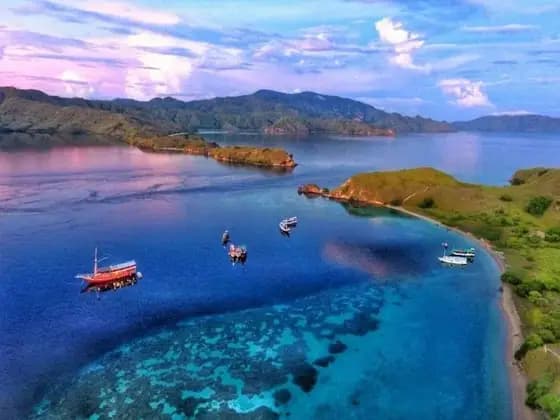

En Phinisi erbjuder traditionellt träsnideri och elegant design med djupare djupgående för dykning vid offshore-rev, medan en katamaran ger rymliga däck och grunt djupgående för lugn kryssning i laguner. Välj en Phinisi om du värdesätter klassiskt hantverk och räckvidd till havs; välj en katamaran för maximal komfort och stabilitet i skyddade vatten.
| Egenskap | Phinisi | Katamaran |
|---|---|---|
| Typisk längd | 25–45 m | 20–35 m |
| Djupgående | 2,5–4 m (djupt) | 1–1,5 m (grunt) |
| Maximalt antal gäster | 12–20 | 12–24 |
| Hastighet (knop) | 8–12 | 10–15 |
| Konstruktion | Handskuren teak, stålram | Glasfiber- eller aluminiumskrov |
| Bäst för | Offshore-revdyk, nattdyk, kulturell fördjupning | Lagunkryssning, familjevänligt, gruntvattensnorkling |
| Typisk bas | Labuan Bajo, Bali, Lombok | Labuan Bajo, Giliöarna, Flores |
När du kliver ombord på en Phinisi är det första du lägger märke till doften av åldrad teak som blandas med den salta tangen från Flores-havet. Skrovets slanka linjer, uthuggna av generationer av skeppsbyggare, viskar historier om forna handelsmän som en gång navigerade samma strömmar. För en dykare som längtar efter autenticitet börjar ofta debatten phinisi mot katamaran med denna sensoriska fördjupning.
| Område | Beskrivning |
|---|---|
| Brygga | Högt belägen, med panoramafönster som ramar in soluppgången över Padar Island. |
| Salong | Öppen planlösning, ofta med en polerad teakbar, ett gemensamt bord och en karta på väggen där du kan planera din dykresa. |
| Däck – Fördäck | Brett, rymligt, idealiskt för solbad eller ett snabbt dopp i havet. |
| Däck – Akter | Utrustat med en avtagbar plattform för enkel ombordstigning i dykbåtar eller kajaker. |
En Phinisins djupare djupgående (2,5–4 m) låter dig ankra utanför revets skyddande lagun, vilket ger direkt tillgång till platser som Manta Point (30 m) och Batu Bolong (45 m) där strömmarna är starkare och marint livet mer rikligt. Fartygets stabilitet i måttligt hav gör också nattdyk på Komodos "Shark Alley" (25 m) genomförbara, även när månen är en tunn skära.
Insidertips: Fråga din charteroperatör om "ankarspelschemat" – många Phinisi släpper sitt ankare vid högvatten för att undvika revskador, och positionerar sedan om vid lågvatten för optimal dykstart.
Om du föredrar ett fartyg som känns som en flytande resort, levererar katamarans tvåskrovsdesign oöverträffad däcksyta och en mjuk gungning. I samma ögonblick som du kliver ombord på en katamaran fångar det breda, luftiga däcket brisen, och dieselmotorns svaga surr är knappt hörbart över den avlägsna ropen från en vitbukig havsörn.
| Område | Beskrivning |
|---|---|
| Flybridge | Högt belägen styrplats med 360° sikt, perfekt för att få syn på mantaråkor eller den avlägsna silhuetten av Komodovaraner på klippöarna. |
| Salong | Öppen, med en stor U-formad soffa, ett teaksoffbord och ett toppmodernt ljudsystem för kvällssammankomster. |
| Däck – Huvuddäck | Omfattande, ofta utrustat med en jacuzzi, en skuggad lounge och en våtbar som serverar färskt kokosvatten rakt från palmträden på däck. |
| Tender | En liten RIB (Rigid Inflatable Boat) redo för gruntvattensnorkling runt Pink Beach (djup 2–5 m). |
Tack vare sitt grunda djupgående kan en katamaran kryssa rakt in i de skyddade lagunerna vid Manta Point eller Padars dolda vikar, vilket gör att du kan snorkla eller dyka från däck utan separat utsättning. Den stabila plattformen minskar också sjösjuka för icke-dykare, vilket gör den idealisk för familjer eller grupper som vill njuta av havet utan "gungningskänslan" hos ett djupgående fartyg.
Insidertips: När du chartrar en katamaran, be om "tidvattensmedveten resväg" – besättningen kommer att anpassa rutten för att hålla sig inom säkra djupgränser (vanligtvis >1,5 m) samtidigt som du fortfarande når de främsta dykplatserna.
Nedan följer en jämförelse sida vid sida som destillerar de väsentliga skillnaderna i debatten phinisi mot katamaran. Använd denna tabell som snabbreferens när du talar med din charterspecialist.
| Kategori | Phinisi | Katamaran |
|---|---|---|
| Estetik | Klassisk träsilhuett, kulturarv | Moderna slanka linjer, samtida lyx |
| Djupgående | 2,5–4 m – bättre för offshore-rev | 1–1,5 m – idealiskt för grunda laguner |
| Stabilitet | Bra i måttligt hav; mer gungning i svall | Utmärkt; minimal gungning, bra för familjer |
| Hastighet | 8–12 knop (stadig) | 10–15 knop (snabbare) |
| Däcksutrymme | Måttligt, med fokus på interiörkomfort | Stora, öppna däck för solbad och socialt umgänge |
| Dykåtkomst | Direkt till djupa platser (30–45 m) | Direkt till grunda platser (2–15 m) |
| Nattdyk | Genomförbart med stabil plattform | Möjligt men begränsat av grunt djupgående |
| Kulturell upplevelse | Hög – besättningen delar ofta lokal folklore | Måttlig – besättningen kan vara internationell |
| Bästa säsong | Torrperioden (april–oktober) för offshore-förhållanden | Torrperioden för lugnt hav; regnperioden för lugnare laguner |
| Typisk gästprofil | Dykare som söker autenticitet, fotografer, små grupper | Familjer, lyxsökare, grupper med blandad förmåga |
Komodos marina ekosystem dansar efter monsunens rytm, och ditt val av fartyg bör harmoniera med denna naturliga koreografi.
| Månad | Väder | Rekommenderat fartyg | Anmärkningar |
|---|---|---|---|
| April–maj | Lugna vindar, klart vatten | Katamaran eller Phinisi | Bästa synlighet för snorkling; mantaråkor samlas vid rensningstationer |
| Juni–augusti | Stabila passadvindar, måttlig svall | Phinisi | Offshore-platser som Castle Rock och Crystal Rock nås bäst med djupgående |
| September–oktober | Starkare vindar, större svall | Phinisi | Nattdyk på Tatawa Besar är exceptionella; katamaraner kan uppleva gungning |
| November–mars | Regnperiod, oberäkneligt väder | Katamaran (lagunfokus) | Många operatörer pausar offshore-rutter; fokusera på skyddade vikar |
Både Phinisi- och katamarankonstruktioner har unika ekologiska fotavtryck som medvetna resenärer bör beakta.
Insidertips: Leta efter operatörer som är medlemmar i Indonesian Marine Tourism Association (IMTA) – de följer strikta riktlinjer för ankring, avfalls hantering och korallbevarande.
| Kostnadspost | Phinisi (per natt) | Katamaran (per natt) |
|---|---|---|
| Standardcharter (4–6 gäster) | 2 500–4 500 USD | 3 000–5 500 USD |
| Lyxcharter (8–12 gäster) | 5 000–8 000 USD | 6 000–10 000 USD |
| All-inclusive-måltider | Inkluderat (traditionell indonesisk mat) | Inkluderat (internationell fusion) |
| Dykutrustning | Ofta inkluderat (12L aluminiumflaskor) | Tillval (ofta |