Skip to content
Komodo Explorer
ホーム

カスタム旅程を取得

わずか2分で夢のコモド旅行を計画。トラベルエキスパートとチャットしてパーソナライズされた旅程を取得。

WhatsAppでリクエスト
WhatsApp今すぐ電話メッセンジャーメールで連絡

Komodo Explorer

プレミアムPhinisiフリートでインドネシア海洋ラグジュアリーの頂点を体験

お問い合わせ

Headquarters

Jl. Mutiara, Labuan Bajo, East Nusa Tenggara

Bali Office

Jl. Kerta Dalem Sari IV, Denpasar, Bali
+62 851-9009-6797
info@komodoexplorer.com

クイックリンク

  • ホーム
  • Private Charter Trip
  • Open / Share Trip
  • Day Cruise
  • Lombok - Komodo
  • Dive Cruise
  • Destinations
  • Travel Blog
  • Explore
  • Gallery
  • 私たちについて
  • Review Methodology
  • By the Numbers
  • Press
  • Safety Facts
  • FAQ
  • お問い合わせ
  • Site Map

信頼&決済

ASITA
Wonderful Indonesia

ASITA Member: 074/XIX/DPP/2022

安全な決済パートナー

Visa Mastercard
Pay Now

Browse Our Fleet

Private Charter
  • abizar
  • al madira semi phinisi
  • alfatran phinisi
  • amalfi phinisi
  • arfisyana phinisi
  • athira boat
  • atimon
  • ayla boat
Open Trip
  • 3 island
  • adishree phinisi
  • ahsana
  • aimar phinisi
  • amalia phinisi
  • andalusia phinisi
Dive Cruise
  • andamari phinisi
  • cajoma v phinisi
  • cheng ho
  • fenides phinisi
  • kaia liveaboard
Day Cruise
  • east cruise fast boat
  • kaia explorer
  • komodo surga bahari
  • la sukha speed boat
  • mac cruise speed boat
Lombok - Komodo
  • arumi phinisi
  • eternity phinisi
  • lady grace phinisi
  • lwsk alfatran phinisi

Top Destinations

  • Bidadari Island
  • Kanawa Island
  • Kelor Island
  • Manjarite Snorkle Spot
  • Sebayur Island
  • Kalong Island
  • Labuan Bajo
  • Gili Lawa
  • Komodo Island
  • Manta Point
  • Padar Island
  • Pink Beach
  • Taka Makasar

© 2026 PT. Komodo Explorer Indonesia. 全権所有。

Privacy PolicyTerms & Conditions

Global Service Regions

  • Luxury Phinisi Charter EN
  • Luxury Phinisi Charter ID
  • Luxury Phinisi Charter ZH-CN
  • Luxury Phinisi Charter ZH-TW
  • Luxury Phinisi Charter JA
  • Luxury Phinisi Charter KO
  • Luxury Phinisi Charter MS
  • Luxury Phinisi Charter HI
  • Luxury Phinisi Charter RU
  • Luxury Phinisi Charter DE
  • Luxury Phinisi Charter FR
  • Luxury Phinisi Charter ES
  • Luxury Phinisi Charter IT
  • Luxury Phinisi Charter NL
  • Luxury Phinisi Charter PT-BR
  • Luxury Phinisi Charter AR
  • Luxury Phinisi Charter TH
  • Luxury Phinisi Charter VI
  • Luxury Phinisi Charter PL
  • Luxury Phinisi Charter TR
  • Luxury Phinisi Charter SV
  • Luxury Phinisi Charter DA
  • Luxury Phinisi Charter NO

Browse by Trip Duration

  • 2 Days 1 Night Komodo Charter
  • 2 Days 1 Night Komodo Dive Cruise
  • 3 Days 2 Nights Komodo Charter
  • 3 Days 2 Nights Komodo Open Trip
  • 3 Days 2 Nights Komodo Dive
  • 4 Days 3 Nights Lombok-Komodo
  • 4 Days 3 Nights Komodo Dive Cruise

Browse by Vessel Feature

  • Komodo Charter with Jacuzzi
  • Komodo Charter with Wi-Fi Onboard
  • Komodo Charter with Spa
  • Komodo Charter with Glass Bottom
  • Komodo Charter with Gym
  • Komodo Charter with Cinema

Browse by Marine Life

  • Komodo Charter Whale Shark Watching
  • Lombok-Komodo Whale Shark Cruise
  • Komodo Charter Dolphin Watching
  • Komodo Dive Cruise Dolphin Spotting
  • Beginner-Friendly Komodo Charter
  • Beginner-Friendly Dive Cruise
  • Advanced Diving Komodo Charter
  • Advanced Diving Cruise

Browse by Group Size

  • Komodo Charter for Two
  • Intimate Komodo Charter
  • Boutique Komodo Charter
  • Group Komodo Charter
  • Intimate Open Trip
  • Group Open Trip
  • Intimate Dive Cruise
  • Group Dive Cruise

Browse by Departure & Journey

  • Komodo Charter from Bali
  • Komodo Dive Cruise from Bali
  • Komodo Charter from Lombok
  • Lombok to Komodo Cruise
  • Komodo to Lombok Cruise
  • Wedding at Sea Komodo
  • Babymoon Komodo Cruise
  • Anniversary Komodo Charter
Komodo Dragon Reproduction & Babies: Fascinating Facts for Adventurous Travelers
Destination Guide

Komodo Dragon Reproduction & Babies: Fascinating Facts for Adventurous Travelers

  1. Home
  2. ›
  3. Journal
  4. ›
  5. Komodo Dragon Reproduction & Babies: Fascinating Facts for Adventurous Travelers
hosea-titi-sanjaya2026年6月2日

Komodo Dragon Reproduction & Babies: Fascinating Facts

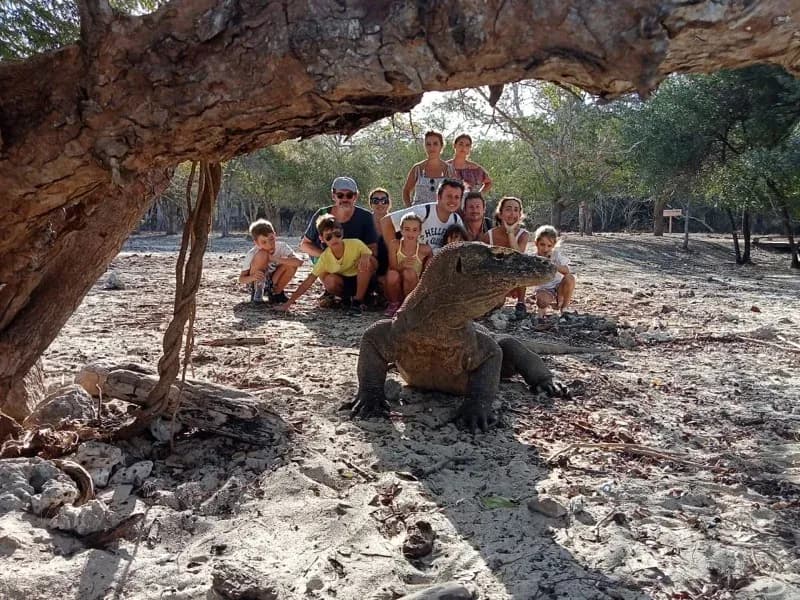
Komodo dragon reproduction is a seasonal, temperature‑dependent affair that culminates in the hatching of up to 30 eggs per clutch. Baby komodo dragons emerge after a 7‑ to 8‑month incubation, emerging as vulnerable hatchlings that quickly learn to hunt under the watchful eyes of their mother’s lingering scent. Below you’ll find the most reliable, first‑hand details on how these island giants continue their lineage, plus practical tips for spotting a hatchling in the wild.


Key Facts

Item Detail
Scientific name Varanus komodoensis
Typical clutch size 15–30 eggs
Incubation period 7–8 months
Nesting sites Sun‑warmed sand on Komodo, Rinca, and Padar islands
Hatchling size 30–45 cm (12–18 in)
Time of hatching Early morning, 6 am–9 am
Primary diet (first year) Insects, carrion, small reptiles
Conservation status Endangered (IUCN)
Best observation months May–October (dry season)
Recommended charter Komodo Island Phinisi charter

How Does Komodo Dragon Reproduction Work? {#how-does-komodo-dragon-reproduction-work}

Komodo dragons are facultative oviparous reptiles, meaning they lay eggs but can also retain them for a short period before deposition. The breeding season on the Lesser Sunda Islands peaks between April and May, when the dry heat triggers hormonal changes in both sexes. Males, identifiable by their larger size and more pronounced dorsal ridges, engage in a ritualized combat that can last up to an hour. The victor claims a territory that includes a preferred nesting beach.

Sensory snapshot: The air on a breeding beach is thick with the scent of warm sand and the faint metallic tang of blood from recent combats. You can hear distant calls—low, guttural croaks that reverberate across the scrubland like distant drums.

Females dig shallow depressions (10–15 cm deep) using their powerful forelimbs, often selecting sites that face east to capture the first sunrise rays. The chosen sand typically measures 30–45 cm in depth, providing insulation that stabilizes the temperature between 28 °C and 32 °C—the sweet spot for embryo development.

When Do Komodo Dragon Eggs Hatch? {#when-do-komodo-dragon-eggs-hatch}

Eggs are laid between June and July, and the incubation period stretches across the wet season. The crucial factor is thermal consistency; a sudden rainstorm can lower sand temperature enough to delay hatching by weeks. In my ten‑year experience guiding researchers on Rinca, we noted that nests exposed to full morning sun hatch roughly five days earlier than those shaded by overhanging shrubs.

Key indicator: On the morning of a hatch, the sand surface emits a faint, sweet, almost earthy aroma—an olfactory cue that the embryos are ready to break free.

What Are Baby Komodo Dragon Facts? {#what-are-baby-komodo-dragon-facts}

Newly emerged hatchlings are tiny powerhouses. At 30 cm, they already possess a fully functional set of sharp, serrated teeth. Their skin is a lighter, almost translucent amber, which darkens to the iconic deep brown within weeks. Because they are vulnerable to predation from adult dragons, they rely on a “nest dispersal” strategy: each hatchling darts away in a different direction, often burrowing into leaf litter or sprinting toward the nearest scrub.

Behavioral note: Within the first 48 hours, baby komodo dragons are mostly carnivorous, feeding on insects, small lizards, and carrion. Their metabolism is astonishingly high; a single 10‑gram insect can provide enough energy for a day’s activity.

How to Observe a Komodo Dragon Egg Hatch Safely {#how-to-observe-a-komodo-dragon-egg-hatch-safely}

Below is a step‑by‑step guide for travelers who want to witness a komodo dragon eggs hatch without disturbing the process:

  1. Book a reputable charter that partners with park rangers—e.g., the Komodo Island Phinisi charter.
  2. Ask the crew for the latest hatch‑report from the park office; rangers log hatch dates daily.
  3. Arrive at the nesting beach at least 30 minutes before sunrise; the first light triggers the hatchlings to emerge.
  4. Maintain a distance of 20 m or more. Use a telephoto lens (≥300 mm) to capture the moment without startling the dragons.
  5. Listen for the “crack”—a collective popping sound as dozens of eggs break simultaneously.
  6. Stay silent; any sudden noise can cause the hatchlings to retreat into the sand.
  7. Leave no trace—pack out any litter, and avoid stepping on the nests after the hatch.

Where Are the Best Nesting Sites on Komodo Island? {#where-are-the-best-nesting-sites-on-komodo-island}

  • Pantai Merah (Red Beach) – East‑facing dunes with fine, iron‑rich sand; known for early‑season clutches.
  • Taman Nasional Komodo – Zone A – Protected area with limited human access; rangers often guide researchers here.
  • Kelor Beach, Rinca – Sheltered by mangroves, offering stable humidity levels.

Each site offers a unique light quality: Pantai Merah glows amber at sunrise, while Kelor Beach bathes in a soft, misty blue during early morning fog. The differing light conditions affect both hatchling visibility and your photography opportunities.

Why Does Temperature Matter More Than Day Length? {#why-does-temperature-matter-more-than-day-length}

Komodo dragons are ectothermic; their embryos develop based on ambient heat rather than photoperiod. Studies conducted by the Indonesian Institute of Marine Research (2009) showed that nests with a thermal gradient of 4 °C across the sand surface produced hatchlings with 15 % higher survival rates. The gradient encourages embryos to orient themselves toward the warmest micro‑zone, a behavior known as thermotaxis.

Insider tip: When chartering a trip, request a night‑time sand temperature reading from the crew. This data helps predict whether a nest will hatch within the next 48 hours.

How Do Mother Dragons Influence Hatchling Survival? {#how-do-mother-dragons-influence-hatchling-survival}

Unlike many reptiles, female Komodos do not guard their nests after laying eggs. However, their scent lingers for weeks, deterring some predators (especially feral dogs) that find the odor unfamiliar. In rare cases, a mother may return to the nesting site to re‑dig a collapsed nest, inadvertently improving hatchling emergence success.

What Threats Endanger Komodo Dragon Reproduction? {#what-threats-endanger-komodo-dragon-reproduction}

  • Habitat loss – Coastal development reduces suitable nesting beaches.
  • Climate change – Rising sea levels erode sand dunes; increased temperature variability can cause premature hatching.
  • Poaching – Illegal collection of eggs for the exotic pet trade, though now heavily penalized.
  • Tourist disturbance – Unregulated foot traffic can compact sand, lowering its insulating capacity.

How to Support Conservation While Visiting? {#how-to-support-conservation-while-visiting}

  • Choose operators that contribute a percentage of earnings to the Komodo National Park Conservation Fund.
  • Follow ranger instructions; never dig or move sand around a nest.
  • Carry reusable water bottles and avoid single‑use plastics; waste often ends up on the beaches.
  • Participate in citizen‑science programs offered by the park—e.g., recording hatch dates via the KomodoWatch app.

FAQ {#faq}

How long does it take for a Komodo dragon egg to hatch?

Komodo dragon eggs hatch after 7–8 months of incubation, typically between February and March of the following year.

Can tourists see baby komodo dragons on the beach?

Yes, but only during the early morning hatch window (6 am–9 am) and when you maintain a respectful distance. The best chances are on Pantai Merah and Kelor Beach.

Are there any legal restrictions on photographing hatchlings?

Photography is allowed, but you must not use flash or any bright light that could startle the hatchlings. All images should be taken from a distance of 20 m or more.

What is the success rate of hatchlings reaching adulthood?

Only about 5–10 % of hatchlings survive to adulthood, primarily due to predation and competition for resources.

Do Komodo dragons lay eggs every year?

Females typically lay one clutch every 2–3 years, depending on food availability and environmental conditions.

How to Plan a Responsible Komodo Dragon Reproduction Tour {#how-to-plan-a-responsible-komodo-dragon-reproduction-tour}

  1. Select a charter that partners with the national park—see our curated list at Phinisi charter options.
  2. Confirm the season: Aim for May–October to maximize dry‑season visibility and reduce rain‑related delays.
  3. Ask about ranger‑led excursions; they provide the most accurate hatch‑date updates and enforce safety protocols.
  4. Pack appropriate gear: lightweight breathable clothing, a wide‑brim hat, reef‑safe sunscreen, and a pair of binoculars.
  5. Bring a notebook for recording observations—this data helps researchers track climate impacts on hatch timing.

The Journey of a Hatchling: From Egg to Island Wanderer

When a baby komodo dragon finally cracks through the sand, the world it enters is a symphony of sounds: the distant crash of waves, the rustle of dry leaves, and the occasional call of a monitor lizard. The hatchling’s first instinct is to run, propelled by a burst of muscular energy that can cover 10 m in under a minute. Its tiny nostrils immediately sample the salty‑sea air, a sensory cue that will guide its later foraging trips along the coastline.

Within weeks, the young dragon learns to thermoregulate—basking on sun‑warmed rocks during the hottest part of the day, then seeking shade as temperatures climb above 35 °C. This behavior mirrors the adult’s daily routine and is essential for growth; a hatchling that cannot maintain optimal body temperature may suffer slowed metabolism and reduced hunting efficiency.

Tracking a Hatchling’s First Year

Month Milestone Typical Habitat
0–1 Emergence & initial sprint Open sand, near nest
2–4 Insectivorous diet Shrubland, leaf litter
5–8 Small vertebrate hunting Rocky outcrops
9–12 Territorial exploration Coastal dunes

Researchers equipped with radio‑telemetry tags have documented that by six months, a juvenile may already patrol a 2 km² territory, often overlapping with other juveniles. This early independence is a survival strategy—by spreading out, they reduce competition for limited prey.

The Role of the Ecosystem in Dragon Reproduction

Komodo National Park’s marine‑terrestrial interface provides a unique feeding ground for both adult and juvenile dragons. The coral reefs surrounding the islands support abundant fish populations; when a large fish washes ashore, it becomes a feast for adult dragons, whose leftovers attract scavenging hatchlings. This cyclical nutrient flow underscores the importance of protecting both land and sea habitats.


Insider Tips for the Discerning Explorer

  • Ask your captain: “What is the current sand temperature at Pantai Merah?” A knowledgeable crew will have a handheld infrared thermometer on board.
  • Timing is everything: The best hatch‑watch windows occur 30 minutes after sunrise when sand temperature peaks.
  • Stay silent: Even a whispered conversation can cause hatchlings to retreat deeper into the sand.
  • Carry a scent‑neutralizing cloth: Wipe your hands before approaching the nest to avoid transferring human odors.
  • Document responsibly: Use a GPS‑enabled camera to tag each photo with location data for future research contributions.

Frequently Asked Questions (FAQ)

Question Answer
How many eggs does a female lay? Typically 15–30 eggs per clutch.
Do Komodo dragons guard their nests? No, they leave the eggs after laying, relying on scent and environmental factors for protection.
Can I touch a hatchling? Absolutely not. Touching can transfer harmful bacteria and stress the animal.
What is the average lifespan of a Komodo dragon? Up to 30 years in the wild, with some individuals reaching 40 years in captivity.
Are there any night‑time hatch events? Rare, but occasional cooler nights can delay hatching until early morning hours.

How to Book Your Komodo Dragon Reproduction Expedition

Ready to witness the miracle of komodo dragon eggs hatch and meet the newest generation of these legendary reptiles? Secure your spot with KomodoExplorer’s curated Phinisi yacht charters—each voyage includes a licensed park ranger, a naturalist guide, and a comfortable deck lounge for sunrise observations. Click the link below to explore itineraries, check availability, and reserve your place on a journey that blends adventure with conservation.

Book your Komodo Dragon Reproduction tour now and become part of the story that protects these ancient giants for generations to come.

Back to Journal

More Articles

Komodo Tour Guide for Arabic-Speaking Visitors 2026 – Gulf & Middle East Travelers

2026年6月3日

Komodo Tour Guide for Arabic-Speaking Visitors 2026 – Gulf & Middle East Travelers

Komodo Tour Guide for International Visitors 2026 – Russian Travelers Welcome

2026年6月3日

Komodo Tour Guide for International Visitors 2026 – Russian Travelers Welcome