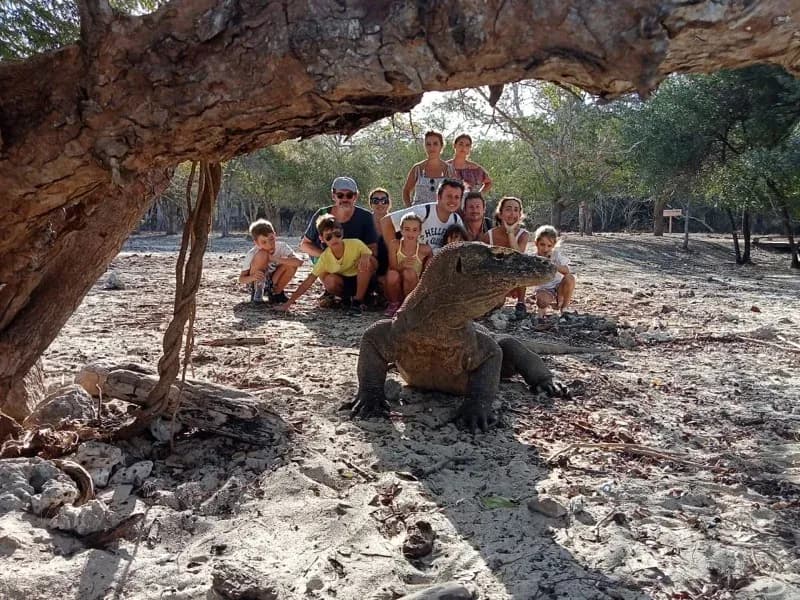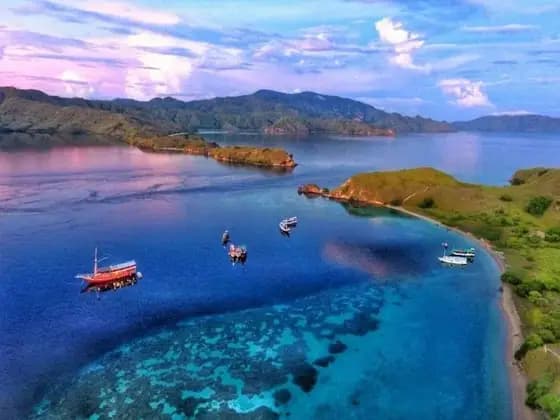
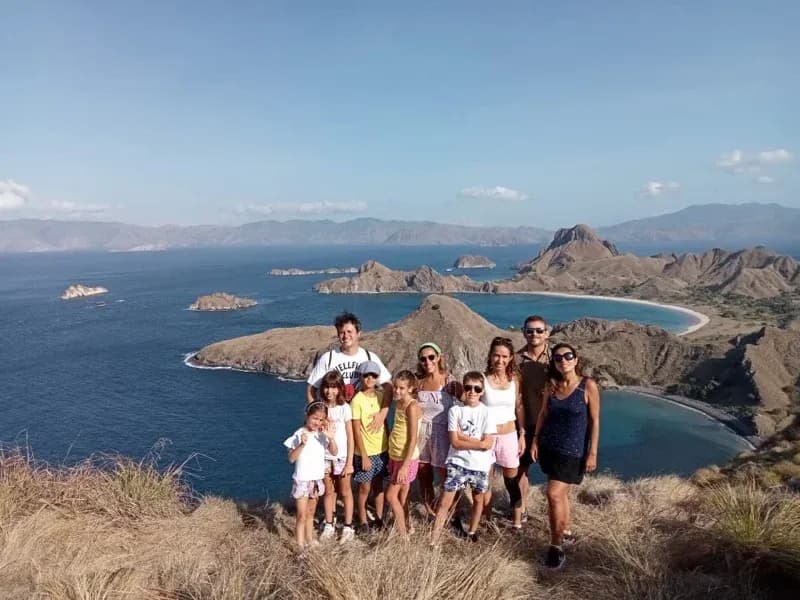
Komodo dragon trekking offers a rare chance to witness the world’s largest lizard in the wild. These prehistoric predators roam freely in Komodo National Park, primarily in Loh Liang on Komodo Island and Loh Buaya on Rinca. With a trained ranger, visitors can observe them safely on guided treks through savannah and coastal forest.
The Komodo dragon—Varanus komodoensis—exists nowhere else on Earth outside Komodo National Park. This UNESCO World Heritage site, straddling the Lesser Sunda Islands, provides the perfect blend of rugged terrain, tropical dry forest, and coastal scrub that these apex predators require. While often associated solely with Komodo Island, the dragons also thrive on Rinca, Gili Motang, and parts of Padar, though in smaller numbers. The park’s isolation has allowed this species to evolve over millions of years, largely undisturbed until the 20th century. Today, conservation efforts ensure their habitat remains protected, but their survival hinges on responsible tourism. Trekking routes are carefully managed to prevent disruption to nesting sites and hunting grounds, especially during the dry season when dragons congregate near water sources. For visitors, this means encounters are not only thrilling but also ecologically respectful—each step taken under the watchful eye of a certified ranger.
For those pursuing authentic Komodo dragon trekking experiences, two primary launch points dominate: Loh Liang on Komodo Island and Loh Buaya on Rinca. Loh Liang, accessible via boat from Labuan Bajo, hosts the largest concentration of dragons. Its network of trails winds through open grassland and low forest, offering clear visibility—ideal for photography and observation. Rinca’s Loh Buaya presents a slightly wilder vibe. Fewer tourists, denser vegetation, and frequent sightings of juveniles make it a favorite among seasoned explorers. Both sites require mandatory ranger escort, but Rinca’s more relaxed pace allows for longer, contemplative treks. Other locations like Gili Lawa Darat offer day-trip potential, though dragon sightings are rare. For a comprehensive experience, pair your trek with a visit to nearby Pink Beach or Manta Point—ecological jewels that underscore the richness of this marine and terrestrial sanctuary.
The dry season—roughly May through October—is widely regarded as the optimal window for Komodo dragon trekking. During these months, dwindling water sources concentrate dragons near riverbeds and ranger stations, increasing sighting odds. The cooler mornings, especially between 7:00 and 9:30 AM, are when dragons are most active, basking or patrolling their territories. Avoid the midday heat, when both reptiles and hikers retreat into shade. The wet season (November to April) brings lush greenery but muddy trails, limited visibility, and more elusive dragons. That said, adventurous travelers willing to brave the elements may enjoy fewer crowds and dramatic skies over Padar’s iconic hills. Regardless of timing, always coordinate with local ranger schedules—treks are typically offered twice daily, and group sizes are regulated to minimize disturbance. Booking through a reputable operator like KomodoExplorer ensures seamless alignment with park logistics and tide patterns.
A Komodo dragon trek is not a casual stroll—it’s a calculated encounter with a wild predator. Every visitor must be accompanied by an armed park ranger, trained in dragon behavior and emergency response. Treks usually last 60 to 90 minutes, covering 1.5 to 3 kilometers depending on the route and group fitness. You’ll walk single file, staying behind the ranger who carries a forked stick and a wooden replica of a dragon to ward off curious or aggressive animals. Silence is encouraged; sudden movements or loud noises can provoke a charge. The terrain varies from dusty trails to rocky inclines, with minimal shade—sun protection and hydration are non-negotiable. While sightings are nearly guaranteed in peak season, remember: these are wild animals. They may ignore you entirely, or a large male might assert dominance with a low hiss or tail whip. It’s humbling, tense, and utterly unforgettable—a raw reminder of nature’s untamed power.
Responsible Komodo dragon trekking begins with preparation and awareness. First, never wander off-trail—dragons are camouflaged and faster than they appear, capable of bursts up to 20 km/h. Pregnant women, children under 10, and those with mobility issues are discouraged from trekking, as sudden dashes can be dangerous. Wear sturdy footwear, light-colored clothing, and a wide-brimmed hat. Avoid strong perfumes or dangling jewelry, which may attract attention. Do not carry food on the trail; even fruit can trigger aggressive behavior. Most importantly, never attempt to touch, feed, or photograph a dragon at close range. Flash photography is prohibited. Respect extends beyond the dragons—leave no trace, stay on marked paths, and follow your ranger’s instructions without hesitation. By treating this encounter with reverence, you contribute to the conservation of both the species and its fragile habitat. For those seeking deeper immersion, consider a multi-day Phinisi liveaboard, combining trekking with diving and island exploration—visit /dive-cruise to plan your journey.
While Komodo dragon trekking is the headline act, the park’s wonders extend far beyond the reptile’s domain. A short boat ride from Loh Liang reveals Pink Beach, where crushed coral gives the sand its rosy hue—perfect for snorkeling over vibrant reefs. Padar Island offers one of Indonesia’s most iconic hikes, with panoramic views across three seas and crescent bays. Manta Point is a magnet for divers and snorkelers, where gentle giants glide through nutrient-rich currents. These sites are best accessed via private charter, allowing flexibility and exclusivity—ideal for photographers, families, or those avoiding crowded group tours. Consider combining your dragon trek with a sunset cruise around Komodo’s western coast, where the light bathes the cliffs in molten gold. For cultural depth, visit Komodo Village on Rinca to learn about local communities coexisting with the dragons. With so much to explore, many travelers extend their stay through a curated island-hopping itinerary—discover options at /explore and /private-charter.
The best places for Komodo dragon trekking are Loh Liang on Komodo Island and Loh Buaya on Rinca, both within Komodo National Park. These sites offer high sighting success with ranger-led treks through natural dragon habitats.
Yes, when conducted with a certified ranger and following park guidelines. Trekkers must stay behind the guide, avoid sudden movements, and never provoke the animals. Safety protocols are strictly enforced to protect both visitors and dragons.
Entry to Komodo National Park ranges from $25–$100 depending on nationality and season. Guided trek fees are included, but additional costs may apply for boat transfers from Labuan Bajo or private charters.
Children under 10 are not permitted on official treks due to safety concerns. The presence of wild predators and rugged terrain makes the experience unsuitable for young or inexperienced hikers.
Yes, all visitors require a permit issued through Komodo National Park authorities. Most tour operators, including KomodoExplorer, include permit processing in their packages for a seamless experience.