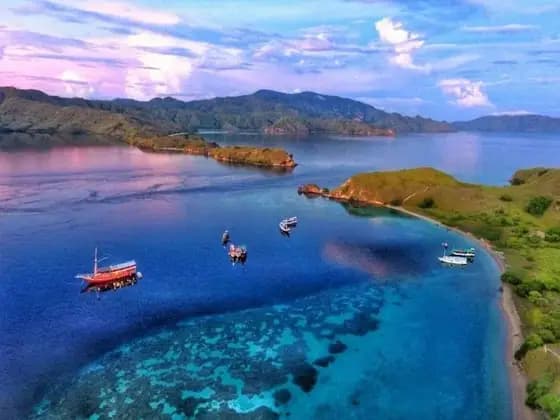
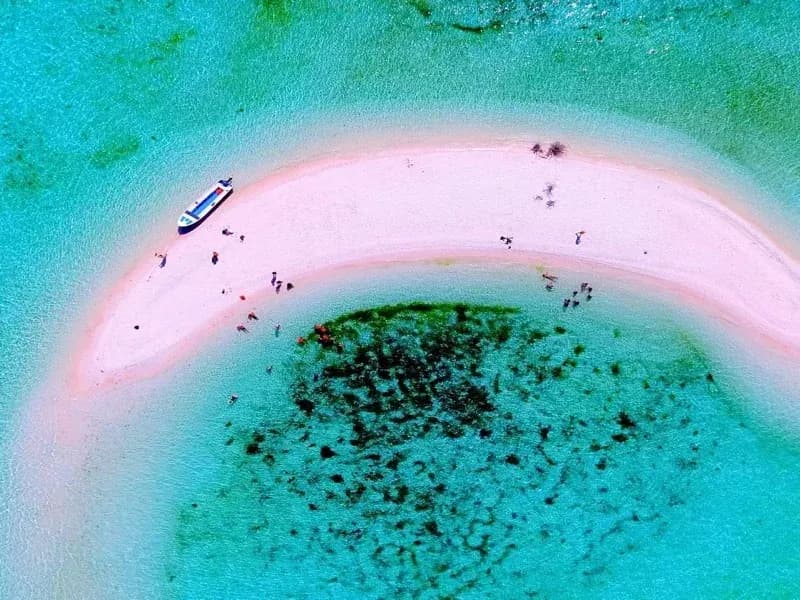
Pink Beach (Pantai Merah) gets its rosy color from crushed red coral mixed with white sand, a rare phenomenon found in only a few places on Earth. Located in Komodo National Park, this blush-hued shoreline is framed by rust-red cliffs and lapped by crystal-clear waters, making it one of the most photographed sites in Indonesia.
The blush tone of Pink Beach isn’t a trick of the light—it’s the result of a delicate natural alchemy. Millions of microscopic organisms known as foraminifera, which produce a vivid red pigment, live inside red coral. When waves break against the reef, fragments of this coral are ground into fine powder and carried ashore. Mixed with the island’s native white silica sand, the result is a soft, rosy tint that stretches along the shoreline. This phenomenon occurs in fewer than a dozen beaches worldwide, making Pink Beach in Komodo National Park a geological treasure. The intensity of the pink hue shifts with the sun; morning light brings out coral highlights, while golden hour deepens the tone into a warm rose. It’s a fleeting, living canvas shaped by tide, time, and tectonics.
Reaching Pink Beach requires crossing the biodiverse waters of Komodo National Park, most often via boat from Labuan Bajo. Most visitors arrive on multi-day Phinisi cruises, traditional wooden sailboats that blend luxury with authentic Indonesian craftsmanship. These vessels navigate the park’s scattered islands with ease, docking near Pink Beach mid-morning when the light is ideal. For those on day trips, speedboats from Labuan Bajo make the journey in about 90 minutes, though they offer less comfort and fewer photo opportunities en route. The beach itself has no roads or signage—only a narrow cove accessible by dinghy. For a more exclusive experience, private charters through KomodoExplorer allow tailored itineraries, with time to linger, snorkel, or simply absorb the silence. Whether you're diving from a Phinisi or stepping off a tender, the journey is as vital to the experience as the destination.
Timing your visit to Pink Beach can mean the difference between serenity and spectacle. The ideal window is during the dry season, from April to October, when skies are clear, waters calm, and visibility for snorkeling exceeds 30 meters. June through August sees peak tourism, so early morning arrivals help avoid crowds and capture the softest light. Outside these months, especially in December and January, sporadic rains and stronger currents can disrupt boat access. Tidal patterns also matter—low tide reveals more of the pink shoreline, while high tide opens up underwater exploration. Sunrise visits offer solitude and cooler temperatures, perfect for photography. Sunset brings golden reflections that deepen the sand’s hue. For divers and marine enthusiasts, pairing your visit with a stop at Manta Point increases the odds of encountering gentle giants gliding just offshore.
While the beach itself invites quiet contemplation, Pink Beach is just one jewel in a crown of natural wonders. Snorkeling off the eastern cove reveals healthy coral gardens teeming with parrotfish, clownfish, and occasional reef sharks. The shallow shelf makes it ideal for beginners, while experienced swimmers can follow the current toward deeper drop-offs. Kayaking—offered on select Phinisi charters—allows silent exploration of the coastline’s hidden inlets. On land, a short hike up the southern bluff offers a panoramic view of the crescent-shaped bay, with Padar Island rising in the distance. For wildlife lovers, combining Pink Beach with a trek on Rinca Island introduces you to the famed Komodo dragon in its natural habitat. Many KomodoExplorer itineraries link these experiences seamlessly, blending relaxation with adventure. And after a morning of exploration, few pleasures rival floating in the warm shallows, watching the pink sand swirl beneath you like powdered gemstone.
Pink Beach’s fragile beauty demands thoughtful stewardship. In recent years, over-tourism and coral damage have threatened the very elements that give the beach its color. Authorities now limit daily visitor numbers and prohibit anchoring directly on the reef—a rule many operators bypass without consequence. Responsible travelers should choose eco-certified cruises that use mooring buoys and employ local guides trained in conservation practices. Never take sand or coral as souvenirs; even small removals accelerate erosion. Stick to marked paths to avoid trampling coastal vegetation, and carry out all waste. Some Phinisi crews partner with marine NGOs to conduct beach cleanups—joining one is a meaningful way to give back. Remember, the pink hue is not infinite. It depends on living coral, stable tides, and minimal human disruption. When you visit with care, you help ensure that future travelers will also stand awestruck on this blush-toned shore. Explore more sustainable options at /explore.
Pink Beach rewards photographers who understand light, perspective, and patience. The best shots are taken within two hours of sunrise or sunset, when the sand glows with warmth and shadows are long and sculptural. Use a polarizing filter to cut glare and enhance contrast between the pink sand and turquoise water. Wide-angle lenses capture the full curve of the bay, while macro settings reveal the tiny red coral fragments embedded in the sand. For human-scale context, position subjects near the tide line with the red cliffs behind them. Drones—where permitted—offer breathtaking aerial views, showing how the pink ribbon wraps around the cove. Avoid midday shoots if possible; the harsh sun bleaches the color and creates unflattering contrasts. And don’t forget underwater photography: the reef just offshore is a mosaic of color that complements the beach’s soft tones. Whether you're using a DSLR or a smartphone, remember that the magic lies in subtlety—the whisper of pink, not a shout.
The pink hue comes from a blend of white sand and microscopic red fragments of coral, produced by foraminifera. These organisms live in red coral, which breaks down over time and mixes with the shore, creating the beach’s distinctive rosy tint.
Yes, many operators offer day trips from Labuan Bajo by speedboat. However, these can be rushed. For a more immersive experience, consider an overnight Phinisi cruise that includes Pink Beach, Manta Point, and Padar.
Yes, access is controlled through Komodo National Park fees, which include conservation and ranger charges. Visitor numbers are limited daily to protect the ecosystem, especially during peak season.
Absolutely. The waters are calm and clear, ideal for swimming and snorkeling. The eastern side offers the best underwater visibility, with vibrant coral and diverse marine life just meters from shore.
Bring reef-safe sunscreen, a wide-brimmed hat, water shoes, a snorkel set, and a dry bag. A light towel and extra water are also essential, as there are no facilities on the beach.