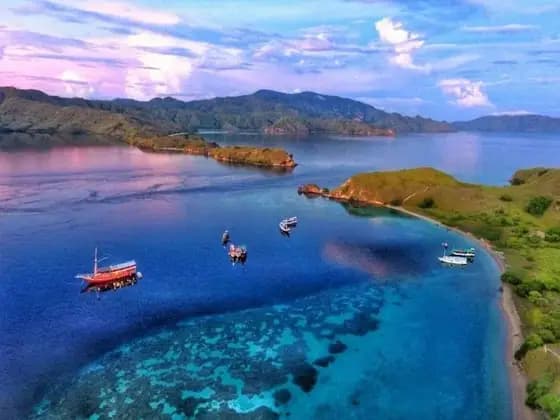

A private trip kapal phinisi from Labuan Bajo gives you exclusive access to Komodo National Park's best dive sites, hidden beaches, and dragon-inhabited islands aboard a handcrafted Indonesian sailing vessel. You control the itinerary, the pace, and who shares the deck with you—whether that's family, friends, or a photography group chasing manta rays at sunrise. This guide covers everything from vessel selection and seasonal routing to the sensory details that make these voyages unforgettable, drawn from fifteen years of operational experience in the Lesser Sunda Islands.
| Detail | Information |
|---|---|
| Charter duration | 2–7 nights (3D2N most popular for Komodo loop) |
| Typical vessel size | 20–40 meters LOA, 2–8 cabins |
| Best season | April–November (dry season, calm seas) |
| Peak manta season | December–February (south Komodo, challenging conditions) |
| National park fees | IDR 3,750,000–5,000,000 per person for 3-day pass (2026 rates) |
| Embarkation port | Labuan Bajo, Flores (Komodo Airport: LBJ) |
| Crew-to-guest ratio | 1:2 to 1:3 on premium vessels |
The distinction matters the moment you step aboard. On a phinisi labuan bajo private charter, the dinghy departs when you finish your coffee, not when the last stranger arrives from shore. I've watched guests spend forty-five extra minutes at Batu Bolong because a pod of dolphins appeared at the surface—impossible on a fixed schedule with twenty other divers waiting.
The sensory difference is equally pronounced. At 5:47 AM in April, the light over Padar Island shifts from violet to molten gold in roughly twelve minutes. On a private vessel, you're on the summit trail by 5:15, alone with the clicking of your boots on volcanic scree and the distant blow of pilot whales in the Savu Sea. Join-in boats rarely make this timing; their guests are still queueing for breakfast.
Sound matters too. The thrum of a shared boat's generator at midnight, the competing music preferences on the sun deck, the inevitable negotiation over dive site priority—these friction points disappear when the vessel is yours. What replaces them is the particular quiet of a phinisi under sail: the creak of ironwood masts, the slap of waves against the hull's curved belly, the call to prayer carrying across the water from a distant fishing village at dusk.
The term "phinisi" covers more variety than most charter guests realize. True pinisi vessels follow the Konjo boatbuilding traditions of South Sulawesi—teak and ironwood hulls, twin masts with rectangular sails, hand-forged fittings. The wood breathes; it smells of resin and salt and decades of ocean. These boats sail beautifully in 15-knot trades but need more maintenance and carry less beam for cabin space.
Modern phinisi hybrids keep the aesthetic silhouette but employ steel or fiberglass hulls, diesel-electric propulsion, and wider beams. They're more stable for photography, more reliable in adverse conditions, and offer ensuite bathrooms that traditional builds struggle to accommodate. For a private trip kapal phinisi with elderly guests or young children, I generally recommend hybrid vessels for their predictable handling and medical-grade stability.
I've seen friendships strained by poor cabin allocation. The critical question isn't "how many cabins?" but "where are they relative to the engine room and generator?" On vessels under 28 meters, aft cabins often vibrate at 8–12 Hz when the main engine runs—fine for deep sleepers, torture for the sensitive. Forward cabins catch more motion in swell but stay quieter.
Ask your operator for the decibel reading at cruising speed. Anything above 65 dB in sleeping quarters will affect rest quality over multi-night trips. Premium operators like those in the KomodoExplorer fleet publish these figures; others will measure if you request it.
Not all phinisi are equipped for serious diving. Verify:
The best phinisi labuan bajo private dive vessels carry a dedicated dive tender separate from the main dinghy, so surface intervals don't strand shore-party guests.
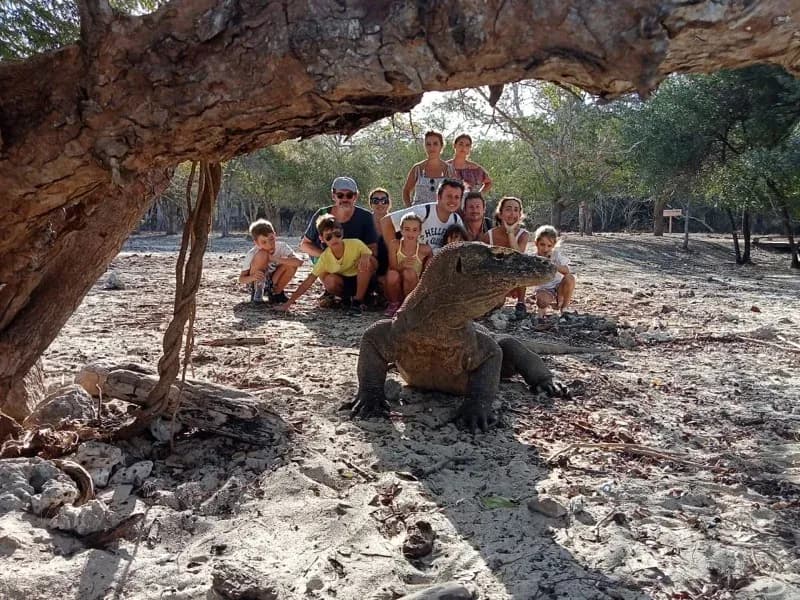
This is the bread-and-butter itinerary, and for good reason. Day one departs Labuan Bajo by noon, reaching Kelor Island for a shakedown snorkel and sunset on Kalong Island's flying fox colony—the air thick with fruit-bat musk and the sound of ten thousand wings at dusk. Day two hits Padar's summit at dawn, Pink Beach before the day-trippers arrive, and Komodo Island for dragon trekking with rangers who know individual animals by scar pattern. Day three dives at Manta Point if conditions allow, then the long tack back to Labuan Bajo with a final stop at Kanawa or Bidadari.
The loop covers roughly 120 nautical miles. In July–August southeast trades, this means beating to windward for portions; modern phinisi with good engines make this comfortable, but traditional sailing vessels may need to motor-sail, consuming more fuel than quoted in brochure rates.
For guests booking a private trip kapal phinisi with genuine exploration in mind, the extended route south to Rinca and the outer islands reveals Komodo's wilder character. We anchor in Nusa Kode's horseshoe bay, where the beach curves like a bear claw and the dragon population density exceeds anywhere in the main park. The smell here is different—more sulfur from volcanic vents, less organic decay than the northern islands.
South Komodo diving in the wet season (December–February) is extraordinary and extraordinarily demanding. Sites like Manta Alley and German Flag operate in 3–4 knot currents with 15-meter visibility. The water temperature drops to 22–24°C, and the thermoclines bite through 5mm wetsuits. This is not beginner territory, but for experienced divers, the reward is manta cleaning stations with fifteen-plus individuals circling in formation, their white bellies catching filtered light from above.
True expedition charters run the full 250-nautical-mile passage from Lombok or even Bali, typically 7–8 nights. This is where phinisi heritage matters—these vessels were built for exactly these waters, carrying spice and timber through the same channels for centuries. The route passes Sumbawa's volcanic coast, the whale-rich waters north of Komodo, and arrives with a sense of journey that flight-based boarding cannot replicate.
I've made this passage forty-plus times. The moment that stays with me: approaching Gili Banta at night under sail alone, the phosphorescence so dense it seems the hull is cutting through liquid starlight, and the mate calling soundings in Bahasa Indonesia from the bow, a tradition unchanged for generations.
The reliable choice. Southeast trades blow 15–20 knots, seas run 1–2 meters, and visibility at northern sites reaches 25–30 meters. May and October offer the best compromise—good weather with fewer vessels than peak July–August. These months also bring the highest likelihood of whale shark encounters at the western park boundary.
Contrary to assumptions, this is not a write-off. Northern Komodo remains diveable in most conditions, and the south opens spectacularly when weather windows align. The risk is logistical: canceled flights into Labuan Bajo, harbor closures for 2–3 days during major systems. For phinisi labuan bajo private bookings in this season, I recommend:
The reward is profound solitude. In January 2024, I ran a private charter to South Komodo with no other vessels sighted in four days—a situation impossible in high season.
My personal recommendation for repeat guests. The transition periods bring unpredictable but often spectacular conditions: glassy mornings with afternoon thunderstorms, or the first/last pulses of the trade winds creating dynamic diving. Marine life is active—turtle mating aggregations in November, shark pupping in shallow nurseries during March.
Premium phinisi for private trip kapal phinisi bookings typically release calendars 12–18 months ahead. The best vessels—those with consistent crew, proper maintenance records, and established safety protocols—fill 6–9 months in advance for high season. Last-minute deals exist but carry risk; you're choosing from vessels with availability for a reason.
For 2026, I'm seeing particular pressure on 3-cabin and 4-cabin vessels suitable for two-generation family groups. If this describes your party, book before September 2025 for April–June 2026 departures.
Beyond the glossy photography, ask:
The KomodoExplorer booking team maintains direct relationships with vessel owners rather than working through aggregators, which allows these conversations to happen efficiently.
Private trip kapal phinisi rates typically include: vessel charter, crew wages, fuel for standard routing, meals and non-alcoholic beverages, snorkeling equipment, and national park permits. What's often excluded: alcoholic beverages (especially spirits), nitrox fills, massage services, crew gratuities (10–15% of charter fee is standard), and fuel surcharges if you deviate significantly from agreed routing.
The "plus-plus" pricing model—quoting a base rate then adding mandatory fees—is frustratingly common. Insist on an all-inclusive figure for budgeting, or at minimum a written maximum for variable costs.
The generator usually cuts before dawn on well-run vessels. You wake to the particular silence of batteries powering minimal systems, then the crew stirring in the forepeak, clinking of the galley preparing coffee. The best captains time arrival at dawn sites so the anchor drops as first light shows; you finish breakfast as the sun clears the horizon, already positioned for the morning's activity.
This is the golden window. Water temperatures are stable, winds typically light, wildlife most active. Two dives or one extended trek, then back aboard for lunch—usually served by 12:30, featuring whatever the cook purchased fresh in Labuan Bajo: tuna from the morning auction, vegetables from the highland markets, perhaps se'i (smoked pork) if the crew knows your preferences from previous trips.
The siesta hours, culturally appropriate and practically wise in tropical sun. Vessels usually reposition during this window, the diesel thrum felt through the deck as you read or nap. The smell of diesel is brief; good ventilation systems clear it quickly, and the trade-off is waking in a new bay.
Second dive or snorkeling session, beach landing, or simply deck time as the light softens. This is when photographers work hardest—the "golden hour" lasts roughly 48 minutes at these latitudes, and the difference between 16:45 and 17:15 light quality is substantial.
Sunset rituals vary by vessel: some carry a proper bar for gin-and-tonics, others focus on fresh-fruit cocktails. Dinner is the social centerpiece, often served on deck under stars if weather permits. The particular quality of darkness here—no light pollution for 40+ miles—means the Milky Way is visible even to aging eyes, and bioluminescence in the wake traces every movement of fish below.
Sleep comes easily with physical exertion and sea air. The vessel rocks in its anchorage, sometimes a gentle sway, sometimes more pronounced if wind shifts against tide. Earplugs are wise; so is a headlamp for nocturnal trips to the head. The best surprise: waking at 02:00 to find the crew fishing off the stern, their conversation in Bugis or Bajo a melodic backdrop to the night.
Indonesian maritime regulation for passenger vessels has improved significantly, but enforcement remains uneven. For phinisi labuan bajo private charters, verify:
I personally inspect vessels in the KomodoExplorer network quarterly, checking safety equipment dates and running abandon-ship drills with crews. Any operator resisting such transparency should not carry your family.
The Komodo National Park ecosystem is under genuine pressure. Responsible private charter practices include:
Some vessels now carry watermakers with sufficient capacity to eliminate single-use plastic bottles entirely. Ask about this; it's a meaningful operational commitment.
The best private trip kapal phinisi experiences include meaningful local interaction. We arrange ranger-guided treks with specific individuals the crew has worked with for years, ensuring your park fees reach community members directly. Some itineraries include stops at fishing villages where you can purchase sustainably caught tuna for the evening meal—cash to families, not intermediaries.
For a quality 3-cabin vessel, expect USD 1,800–2,800 per night for the full charter, inclusive of meals, crew, and standard fuel. Luxury vessels with 5+ cabins, dive facilities, and premium finishes range USD 4,000–7,000 per night. These figures assume 6–8 guests; per-person costs drop with fuller occupancy but the experience remains private to your group. Budget operators exist below these ranges, but I cannot recommend them based on maintenance and crew welfare observations. Contact the KomodoExplorer charter team for vessel-specific quotes matched to your group size and priorities.
Four to six guests offers the best balance of cost distribution and spaciousness. Two-couple charters are common and comfortable; single-family groups with children work well on vessels with dedicated "family cabins" or flexible bedding. Groups larger than eight should consider 35+ meter vessels or two-boat flotillas, which offer interesting social dynamics and redundancy if mechanical issues arise.
Absolutely, with route adjustment. Komodo has beginner-appropriate sites—Sebayur Kecil, Siaba Besar (Turtle City), and sheltered bays around Kanawa. The key is honest assessment of experience levels before booking, so the captain can plan accordingly. Some of my most rewarding charters have been with mixed groups where experienced divers hit challenging dawn sites while beginners enjoy relaxed snorkeling, reuniting for shared meals and land excursions.
Komodo Airport (LBJ) receives direct flights from Jakarta (Garuda, Batik Air, Lion Air), Bali (multiple daily, 70-minute flight), and seasonal international connections. The airport is 10 minutes from the main harbor; most operators include transfer. Build arrival at least one day before embarkation—Labuan Bajo's flight reliability has improved but weather delays still occur, and missing your vessel departure is expensive and disappointing.
Included: vessel, crew, meals, standard route fuel, snorkeling gear, park permits, basic beverages. Extra: alcohol, nitrox, massage, satellite phone use, crew gratuities, fuel for significant route deviations, and any pre/post hotel nights. Some vessels include one massage session or a sunset fishing excursion as standard; others itemize everything. The KomodoExplorer charter consultants provide written itemization before deposit, eliminating the unpleasant surprises I've heard too many stories about.