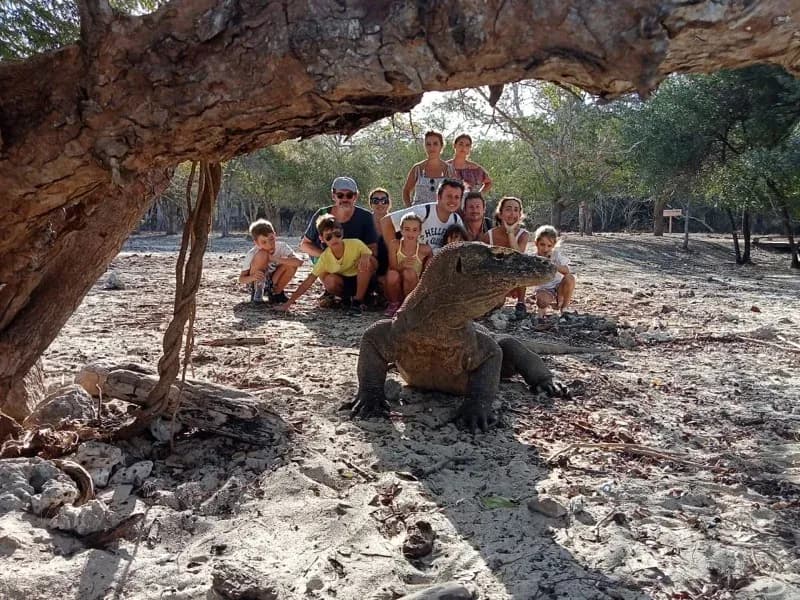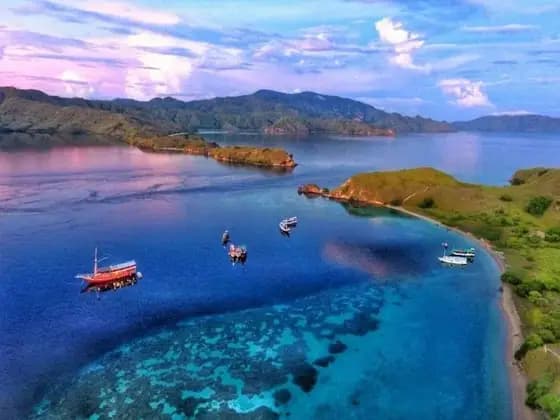

The Suku Bajo of Komodo are a seafaring people whose culture is woven from centuries of navigation, fishing, and reverence for the sea. Desa Komodo Village is the living showcase of this heritage, where traditional wooden houses, boat-building workshops, and daily rituals echo a maritime legacy that still thrives today.
| Fact | Details |
|---|---|
| Location | West Manggarai, East Nusa Tenggara, Indonesia |
| Population | ~1,200 residents (2024 census) |
| Primary Language | Bahasa Indonesia; local dialect “Bajo” |
| Main Livelihood | Fishing, seaweed farming, Phinisi charter services |
| Cultural Highlights | Boat‑building (perahu), traditional dance “Kecak Bajo”, sea‑spirit festivals |
| Nearest Airport | Komodo Airport (KDO), 15 km north |
| Best Time to Visit | April‑October (dry season, calmer seas) |
| Key Dive Sites | Batu Bolong (12 m), Manta Point (18 m) |
| UNESCO Status | Part of the “Komodo UNESCO Global Geopark” network |
The Suku Bajo (often called “Sea Gypsies”) are not a relic of the past; they are the custodians of a living maritime culture that shapes the very rhythm of the Komodo archipelago. Their knowledge of currents, wind patterns, and marine ecosystems rivals that of any modern navigator. For a diver, sailor, or cultural enthusiast, understanding the Bajo way of life deepens every splash of water, every sunrise over the Flores Sea, and every night spent under a canopy of fireflies.
Anthropologists trace the Bajo lineage to ancient Austronesian seafarers who left the Asian mainland around 2,500 years ago. Oral histories recount a great voyage from the Maluku Islands, guided by the constellations Bintang Padi and Bintang Betelgeuse, that eventually anchored them on the rugged coasts of Komodo. Their settlement in what is now Desa Komodo Village dates to the early 19th century, when a series of monsoon‑driven migrations brought families seeking sheltered bays and abundant reef fish.
During the Dutch East Indies period, the Bajo were recruited as “boatmen” to transport spices between ports. Their expertise in navigating the treacherous Sunda Strait earned them a reputation for reliability, yet also subjected them to heavy taxation. After Indonesia’s independence in 1945, the Bajo community negotiated a special maritime zone that recognized their traditional fishing rights—an arrangement still upheld by the Ministry of Marine Affairs.
In the last two decades, the rise of eco‑tourism and Phinisi charter operators has sparked a cultural renaissance. Young Bajo artisans now blend age‑old carving techniques with modern design, producing sleek sailing yachts that attract high‑end travelers from Europe to Southeast Asia. The community’s partnership with KomodoExplorer has further amplified their story, ensuring that visitors experience authenticity rather than a staged performance.
Walking through Desa Komodo, the first thing you notice is the rumah lantang, a traditional stilt house built from mangrove timber and thatched with sijon palm leaves. The scent of fresh sea breeze mingles with the faint aroma of coconut oil used to waterproof the walls. Inside, the floorboards creak softly—a reminder of the tides that rise and fall just meters away.
At the village’s edge, a cluster of perahu workshops hums with activity each morning. Master craftsmen, known locally as tukang perahu, shape hollowed logs into sleek, double‑hull Phinisi vessels. The sound of chisels striking wood is punctuated by the rhythmic chant of workers counting strokes: “Satu, dua, tiga…”. Visitors can watch the process from a shaded platform and even try their hand at carving a decorative prow figure, often a stylized komodo dragon or bajau sea turtle.
Once a month, under a full moon, the village holds the Malam Laut (Sea Night) ceremony. Lanterns made from dried coconut husk are floated on the harbor, creating a glittering path that mirrors the Milky Way. Elders recite ancient verses invoking Baba Laut, the sea spirit, while children perform a kecak dance that mimics the undulating waves. The ceremony ends with a communal feast of grilled ikan tongkol (tuna) and sate kelapa (coconut satay), the smell of which drifts across the bay for miles.
Desa Komodo Village runs a community school that teaches both standard curricula and traditional navigation. Students learn to read bora (wind) and arus (current) using a peta laut (sea map) hand‑drawn on bark. The village also operates a Marine Protected Area (MPA) covering 15 km² of reef, where fishing is restricted to sustainable methods like tangkar (hand‑line) and senggulung (rope trapping). This MPA is monitored by local dive guides who record coral health data for the Indonesian Institute of Marine Science.
| Site | Depth | Notable Species | Best Time |
|---|---|---|---|
| Batu Bolong | 5‑12 m | Neon gobies, Manta birostris | Early morning (6‑9 am) |
| Manta Point | 10‑20 m | Manta rays, reef sharks | Mid‑afternoon (13‑15 h) |
| Dragon’s Lair | 15‑30 m | Komodo dragon reef fish, pygmy seahorses | Low tide (12‑14 h) |
| Coral Garden | 2‑8 m | Hard & soft corals, cuttlefish | High tide (9‑11 am) |
The tidal window is crucial. At low tide, the reef at Dragon’s Lair becomes a labyrinth of exposed coral heads, perfect for macro photography. However, currents intensify, so ask your dive operator for a tide‑aware briefing. I always request a pre‑dive briefing that includes a quick look at the local wind rose—the prevailing east‑southeast breezes can push plankton to the surface, creating spectacular feeding frenzies for larger pelagics.
Ask the Right Questions
Timing Your Arrival
Dress for the Climate
Currency and Payments
Cultural Etiquette
Health Precautions
The perahu (traditional boat) is both a livelihood tool and a spiritual symbol. Its double‑hull design mirrors the duality of land and sea, embodying the Bajo belief that the ocean is a living ancestor. Every launch is accompanied by a brief offering of kembang melati (jasmine) to thank the sea for safe passage.
Visitors can contribute by:
Yes. The Malam Laut (Sea Night) festival occurs on the full moon of each month, and the Bajo Boat Festival—held every August—features a parade of newly launched Phinisi yachts, traditional music, and a communal feast of grilled fish.
While Bahasa Indonesia is the lingua franca, many residents speak a distinct Bajo dialect that includes maritime terminology. Most younger Bajo are fluent in English, especially those involved in tourism. A simple greeting in their dialect—“Selamat pagi, Bapa” (Good morning, father)—goes a long way.
The harbor’s waters are generally calm, protected by a coral reef that buffers wave action. However, currents can strengthen during the southwest monsoon (June‑September). Always swim under the guidance of a local guide, especially if you’re unfamiliar with the area.
The community is at a crossroads where modern tourism meets traditional stewardship. Recent initiatives include a solar‑powered water filtration system that reduces reliance on diesel generators, and a youth mentorship program that pairs elder boat‑builders with aspiring designers. By embracing sustainable practices, the Bajo are ensuring that the cultural tapestry of their maritime heritage will remain vibrant for generations to come.
If you’re yearning to feel the wind in your hair, hear the rhythmic chant of boat‑builders, and dive into waters teeming with manta rays, the time is now. Book your bespoke Phinisi charter with KomodoExplorer and let us guide you through the living heritage of the Suku Bajo and Desa Komodo Village. Our knowledgeable crew will tailor an itinerary that honors the culture, protects the environment, and delivers unforgettable moments—whether you’re charting the reef at sunrise or sharing a fire‑lit dinner with locals under a canopy of stars.
Reserve your adventure today and become part of the story that continues to sail across the Flores Sea.