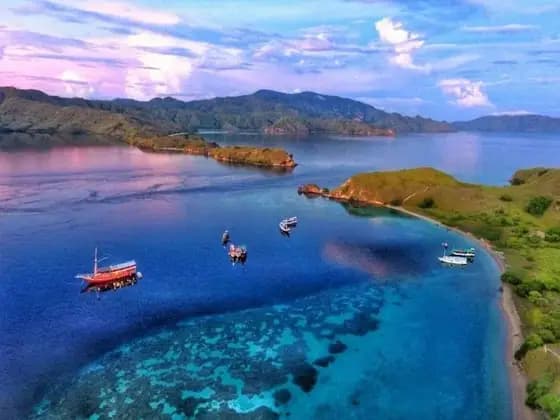
The best time to visit Komodo is April to October, during the dry season, when clear skies, calm seas, and optimal visibility make for exceptional diving, trekking, and island exploration. This period offers the most reliable conditions for visiting Komodo, Rinca, Padar, and Pink Beach with minimal disruption from rain or swell.
Komodo National Park isn’t just another tropical destination—it’s a dramatic convergence of volcanic landscapes, primal wildlife, and underwater wonder. The rhythm of the seasons here shapes every experience, from the ease of hiking to the clarity beneath the waves. Time it right, and you’ll witness Komodo dragons stalking through golden savannah, dive walls teeming with life, and panoramic sunrises over Padar with barely another soul in sight. Get it wrong, and you might find yourself confined to the deck of your Phinisi as monsoon rains lash the archipelago.
The park’s location straddles the biogeographical divide between Asia and Australia, creating a climate that’s as dynamic as its biodiversity. The dry season, running from April to October, is when the park reveals itself in full form—low humidity, steady winds, and sea conditions ideal for exploration. This is when the majority of expeditions, from liveaboard dive cruises to private charters, operate at full capacity. Conversely, November through March brings the wet season, marked by sporadic but intense downpours, stronger currents, and rougher seas. While fewer travelers brave this window, it’s not without its rewards—lush greenery, dramatic skies, and a raw, untouched atmosphere.
For those planning with precision, the key is aligning your priorities: diving? Wildlife? Photography? Serenity? Each season offers a different version of Komodo, but only one delivers the full spectrum with consistency.
If there’s a golden window for visiting Komodo National Park, it’s the dry season—April through October. During these months, the park basks in steady sunshine, with daily temperatures hovering between 26°C and 32°C (79°F–90°F) and humidity that, while present, rarely feels oppressive. This is when the Indian Ocean settles into a gentle rhythm, making boat transfers, snorkeling, and diving not just possible but sublime.
April and May are often overlooked sweet spots. After the last whispers of wet weather fade, the landscape remains vividly green, water visibility reaches 25 meters or more, and the crowds haven’t yet swelled. By June, July, and August, Komodo enters high season—coinciding with European and Australian school holidays. Expect more foot traffic at popular sites like Padar and Pink Beach, especially on group day trips from Labuan Bajo. Booking in advance becomes essential, particularly for coveted Phinisi liveaboard berths or private charters.
September and October are increasingly favored by seasoned travelers. The weather remains stable, seas are calm, and there’s a noticeable tapering off in tourist volume as school resumes abroad. This makes it an excellent time for those seeking balance—perfect conditions without the peak-season bustle. For divers, these months offer the clearest water and most predictable currents, especially at renowned sites like Manta Point, where encounters with gentle giants are nearly guaranteed.
To travel Komodo between November and March is to embrace its wilder side. The wet season brings unpredictable weather—some days are brilliant, with turquoise waters and soft light; others are washed out by sudden storms. But for travelers who prize solitude and dramatic scenery over perfect predictability, this period holds rare magic.
Rain typically comes in short, intense bursts rather than all-day deluges. It’s common to wake to sunshine, trek across Rinca in the morning, and only see clouds gather by late afternoon. The trade-off? Lush, emerald hillsides, waterfalls cascading down volcanic slopes, and a sense of exclusivity as most tour operators scale back operations. Accommodation prices drop, and you might have entire beaches to yourself.
That said, there are limitations. Many dive operators suspend services from December to February due to strong currents and choppy seas, particularly in the deep channels between islands. Some trekking trails can become slippery or temporarily inaccessible after heavy rain. And while the Komodo dragons remain active year-round, sightings may be less frequent as they retreat to shaded areas during storms.
Still, for photographers, filmmakers, and those drawn to raw nature, the wet season offers a Komodo few see—a place of brooding skies, reflective tidal pools, and a primal energy that feels untamed. Just pack a rain jacket, allow flexibility in your itinerary, and you may walk away with the most authentic experience of all.
For underwater enthusiasts, the best time to visit Komodo is deeply tied to dive conditions. The park’s reputation as a world-class dive destination rests on its powerful currents, rich biodiversity, and dramatic topography—from sheer walls to submerged pinnacles. But these same elements demand careful timing.
From April to December, particularly May through October, diving reaches its zenith. Water temperatures hover around 26°C–29°C (79°F–84°F), visibility often exceeds 20 meters, and currents, while still strong, are more predictable. Sites like Batu Bolong and Castle Rock come alive with swirling schools of jackfish, reef sharks, and barracuda. Manta Point remains a reliable hotspot, where divers and snorkelers float effortlessly as mantas circle below, mouths agape, feeding in the nutrient-rich upwellings.
November to February sees a shift. Monsoon swells increase, and surface conditions can be rough, especially on the park’s western and southern exposures. Some operators cancel dives for safety, while others adapt by focusing on more sheltered sites like TK (Turtle Kingdom) or Sebayur. Currents intensify, making these months better suited to advanced divers with solid buoyancy control.
It’s worth noting that Komodo’s marine life doesn’t vanish in the wet season. In fact, certain pelagics are more active during these months due to increased plankton blooms. But accessibility and comfort are key considerations. For most travelers, combining a dive cruise between May and October offers the ideal balance of safety, visibility, and marine spectacle—especially on a tailored itinerary through KomodoExplorer’s dive specialists.
The allure of Komodo National Park is its sense of isolation—standing atop Padar at dawn as the sun spills across the islands, or watching a Komodo dragon amble through dry forest with no one else around. But that solitude is increasingly rare during peak months.
July and August are the busiest, with Labuan Bajo inundated with tour groups, day boats crowding Pink Beach, and ranger stations at Komodo and Rinca packed by mid-morning. If you’re seeking peace, these months demand strategy: early starts, private guides, and less-visited sites like Sebayur or Nusa Kode.
For genuine seclusion, consider shoulder seasons—April, May, or September. These months offer near-perfect conditions with far fewer people. A private charter during this time allows you to anchor in empty bays, hike at your own pace, and linger at dive sites without competition. Even within high season, opting for a multi-day Phinisi cruise rather than a day trip drastically reduces contact with crowds.
Another option? Visit during the quieter end of the wet season—March. The rains are tapering off, the landscape is still lush, and most travelers haven’t yet returned. It’s a gamble, but one that often pays off with serenity, spontaneity, and stories that feel uniquely yours. For those who prioritize intimacy over predictability, timing your visit just outside the mainstream can transform a great trip into a transcendent one.
There’s no single way to experience Komodo National Park—but how you structure your journey depends heavily on when you go. A well-planned itinerary aligns season, interests, and pace to create a seamless adventure.
For first-time visitors during the dry season (April–October), a 3- to 5-day Phinisi liveaboard is ideal. These traditional wooden vessels blend comfort with mobility, allowing you to wake up in a new bay each day. Begin with a trek on Rinca to see Komodo dragons in a slightly less crowded setting than Komodo Island, then sail west to dive Manta Point and snorkel at Pink Beach. End with a sunrise hike on Padar—the panoramic payoff is worth the early alarm.
Divers should prioritize a dedicated dive cruise, focusing on the park’s iconic channels and drop-offs. Operators often design routes to follow seasonal currents and visibility patterns, maximizing underwater encounters. Pair this with a stay in Labuan Bajo to acclimate and explore local markets before or after your voyage.
If you’re visiting in the shoulder or wet season, flexibility is key. Consider a private charter with KomodoExplorer, where the itinerary adapts daily to weather and sea conditions. This allows you to pivot to sheltered coves, hidden lagoons, or cultural stops in nearby villages when needed.
No matter the season, allow time to breathe. Komodo rewards slowness—lingering over coffee as the mist lifts off the water, watching dragons bask on hot rocks, or simply floating above a coral garden alive with color. Rushing through it defeats the purpose. Whether you're exploring on a Phinisi, diving the deep blue, or trekking ancient trails, let the rhythm of the islands set the pace. For more inspiration, explore our curated journeys at /explore or design your own adventure with /private-charter.
The best month to visit Komodo is typically September. It falls within the dry season, offering stable weather, calm seas, excellent diving visibility, and fewer crowds compared to peak months like July and August.
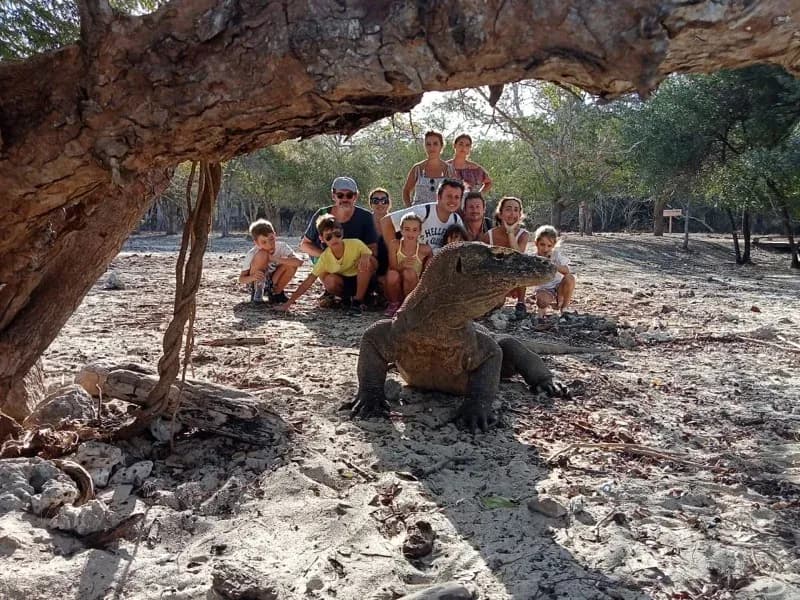
Yes, Komodo dragons can be seen year-round on Komodo and Rinca islands. They remain active in both dry and wet seasons, though sightings may be less frequent during heavy rain when they seek shelter in shaded areas.
Diving in Komodo during the wet season (November–March) is possible but more challenging. Stronger currents and rougher seas make it suitable mainly for experienced divers, and some operators suspend trips during this period.
Ideally, spend 3 to 5 days in Komodo National Park. This allows enough time for trekking, diving, island hopping, and experiencing multiple sites like Padar, Pink Beach, and Manta Point without feeling rushed.
Yes, all visitors to Komodo Island must be accompanied by a certified ranger guide. This rule is strictly enforced to ensure safety and protect both visitors and the natural habitat of the Komodo dragons.