
Booking an open trip Komodo adventure requires choosing a reputable Phinisi operator, verifying safety certifications, securing your deposit 2-3 months ahead for peak season (June-September), and confirming your itinerary includes Komodo National Park permits. The process typically takes 3-5 business days from initial inquiry to confirmed reservation, with most operators requiring 30-50% upfront payment via bank transfer or secure payment gateway.
| Fact | Details |
|---|---|
| Best Booking Window | 2-3 months ahead for peak season; 4-6 weeks for shoulder season |
| Typical Deposit | 30-50% of total trip cost |
| Peak Season | June – September (dry season, mantas active) |
| Standard Duration | 3 days / 2 nights or 4 days / 3 nights |
| Group Size | 8-16 guests on shared Phinisi yachts |
| Permit Requirements | Komodo National Park entry fee + ranger fee (IDR 500K-1M) |
The open trip system—trip terbuka in Indonesian—represents the most accessible entry point into Komodo's marine wilderness. Unlike private yacht charters where you reserve the entire vessel, an open trip allows individual travelers or small groups to book cabin-by-cabin, sharing costs with fellow adventurers.
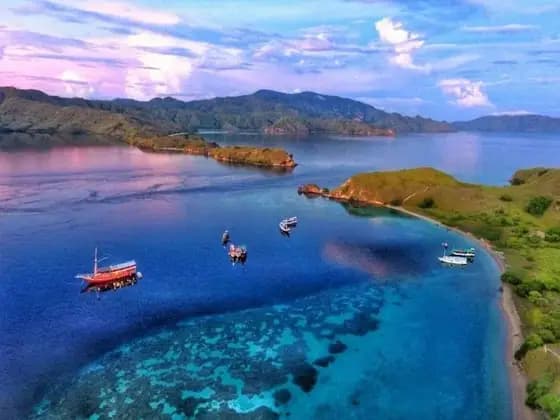
I've watched this model evolve across Labuan Bajo's harbor since 2014. What began as backpacker-centric liveaboards on converted fishing boats has matured into a sophisticated fleet of purpose-built Phinisi yachts, many exceeding 30 meters in length with en-suite cabins, air conditioning, and professional dive decks. The sulfur-tinged morning air still carries diesel exhaust and grilled fish from the warungs along the waterfront, but the vessels themselves now rival boutique hotels in comfort.
The economics are compelling. A private Komodo yacht charter might cost $8,000-15,000 for a 3-night itinerary. An open trip cabin on the same caliber vessel typically runs $400-800 per person—making the UNESCO-listed archipelago accessible to solo travelers, couples, and small friend groups who don't need exclusive use.
Before contacting any operator, establish your non-negotiables. I've seen too many travelers waste days comparing incompatible options.
Duration: The classic 3-day Komodo tour covers Padar Island, Komodo Island, Pink Beach, and Manta Point. The 4-day Komodo itinerary adds northern gems like Gili Lawa Darat and Castle Rock. Extended 5-day Komodo sailing trips reach remote sites like Batu Bolong and the Sape Strait.
Budget tier: Economy (shared bathrooms, basic meals, $250-400), Mid-range (en-suite cabins, varied menu, $450-700), or Premium (master suites, chef-prepared dining, dive equipment included, $750-1,200).
Activity focus: Snorkeling-only, Komodo diving trips with PADI-certified guides, or photography-specialized departures with underwater drone support.
Labuan Bajo hosts approximately 200 registered liveaboard operators, but quality varies dramatically. I recommend this verification hierarchy:
First, check official registration: Valid operators hold permits from the Komodo National Park Authority (TNK) and the Indonesian Tourism Ministry. Request their SIUP (business license) and TDUP (tourism business registration) numbers.
Second, examine vessel documentation: The Phinisi should carry a current seaworthiness certificate (Sertifikat Kelaiklautan) from the Indonesian Classification Bureau. Ask for the vessel's gross tonnage and year of major refit—many "new" yachts are actually 1980s hulls with cosmetic renovations.
Third, review recent, verifiable feedback: Cross-reference Google Reviews, TripAdvisor, and dedicated dive forums. Be suspicious of operators with only 5-star reviews posted within narrow date ranges.
At KomodoExplorer, we maintain transparent vessel specifications for every Phinisi in our network, including hull construction dates, safety equipment inventories, and crew certification levels.
Email remains the most reliable channel for detailed inquiries, though WhatsApp dominates day-to-day Indonesian business communication. When reaching out, include:
A professional operator responds within 24 hours with availability, detailed itinerary, and transparent pricing. Vague quotes or pressure to "book quickly before slots fill" are red flags I've learned to recognize across fifteen seasons in Flores.
Not all Komodo routes are created equal. The standard western loop—Padar, Rinca, Pink Beach, Manta Point—can feel crowded when twelve vessels anchor simultaneously at 6:00 AM.
I specifically examine these elements:
Timing at signature sites: Does the itinerary reach Padar's viewpoint for sunrise (5:30 AM departure from anchor) or sunset? Sunrise offers cooler temperatures, softer light for photography, and significantly fewer visitors. The golden hour light slants across the three-bay panorama in a way that transforms the landscape entirely.
Manta Point scheduling: Tide-dependent. Mantas feed most predictably on rising tide when nutrient-rich water floods through the channel. A competent operator plans arrival 30-45 minutes before optimal tidal conditions.
Komodo dragon encounters: Morning treks (7:00-9:00 AM) on either Komodo or Rinca Island yield more active dragon behavior. Midday heat drives them to shade, reducing wildlife interaction quality.
Once you've selected your operator and received a formal quotation, the booking process follows this sequence:
Deposit payment: Typically 30-50% via bank transfer to an Indonesian business account or secure international payment gateway. KomodoExplorer accepts Wise transfers and major credit cards through encrypted processing.
Confirmation documentation: You should receive a formal booking confirmation with:
Balance settlement: Usually due 14-30 days before departure. Last-minute bookings (within 7 days) may require full upfront payment.
Pre-departure briefing pack: Professional operators provide detailed packing lists, weather forecasts, and emergency contact protocols 48 hours before sailing.
Labuan Bajo's Komodo Airport (LBJ) receives direct flights from Bali (50 minutes) and Jakarta (2.5 hours). I recommend arriving in town at minimum 24 hours before your scheduled departure—weather delays are common during transitional seasons, and you'll want time to settle, purchase any forgotten gear, and attend the pre-trip briefing most operators conduct the evening before sailing.
The harbor itself operates on island time. Your 9:00 AM departure might become 10:30 AM while fresh provisions load and final paperwork clears. Bring patience and a good book. The wooden gangplank creaks underfoot, the diesel generator thrums to life, and then you're underway—southeast across the Savu Sea, the Flores mainland receding into haze.
I've inspected too many "budget" Phinis where life rafts were expired, fire extinguishers uncharged, or crew lacked basic first aid certification. Non-negotiable safety equipment includes:
Ask direct questions. A professional operator answers without hesitation.
Verify whether your booking includes basic travel insurance or if you must arrange coverage independently. KomodoExplorer bookings include emergency evacuation coverage through our partner network, but I strongly recommend comprehensive dive and travel insurance from specialists like DAN (Divers Alert Network) or World Nomads for international guests.
The Komodo region experiences distinct seasons. December-March brings monsoon conditions with occasional itinerary modifications for passenger safety. Reputable operators clearly communicate their policies: do they offer alternative dates, partial refunds, or harbor-based activities if sailing becomes impossible?
The optimal booking window balances price and availability. I've tracked pricing patterns across eight years:
6+ months ahead: Early bird discounts of 10-15% sometimes available for premium vessels during peak season. Limited availability for specific cabin categories.
2-3 months ahead: The sweet spot. Full fleet availability, standard pricing, time to arrange flights and pre/post accommodation.
2-4 weeks ahead: Last-minute deals emerge for remaining cabins, typically 10-20% below standard rates. Limited cabin selection, higher risk of preferred dates selling out.
Under 1 week: Desperation pricing or full sold-out conditions. Possible for shoulder season, nearly impossible June-August.
On shared Phinisi yachts, cabin location significantly impacts sleep quality. Forward cabins experience more motion and anchor chain noise. Aft cabins near the engine room suffer vibration and diesel fumes. Midship cabins on the main deck offer optimal stability and ventilation.
When booking cara booking open trip komodo through our platform, cabin selection is available after deposit confirmation, with detailed deck plans showing exact positioning.
The social aspect makes or breaks open trip experiences. I always ask operators about:
Some Komodo liveaboard departures cater specifically to digital nomads, others to serious underwater photographers with dedicated camera stations and daily image review sessions.
Your alarm sounds at 4:45 AM—not from a device, but from the anchor windlass engaging as crew reposition for the Padar sunrise approach. The galley already smells of frying shallots and brewing kopi tubruk, thick Indonesian coffee sweetened with condensed milk.
By 5:15 AM you're climbing the wooden stairs to Padar's viewpoint, headlamp cutting through pre-dawn darkness. The eastern sky shifts from indigo through violet to burning orange as you reach the summit. Below, the three crescent beaches reveal their distinct personalities: one volcanic black, one powder white, one sheltered cove of coral fragments.
Back aboard by 8:00 AM, breakfast spreads across the aft deck—papaya, dragon fruit, banana fritters, eggs to order. The vessel motors toward Komodo Island while you digest and prepare cameras.
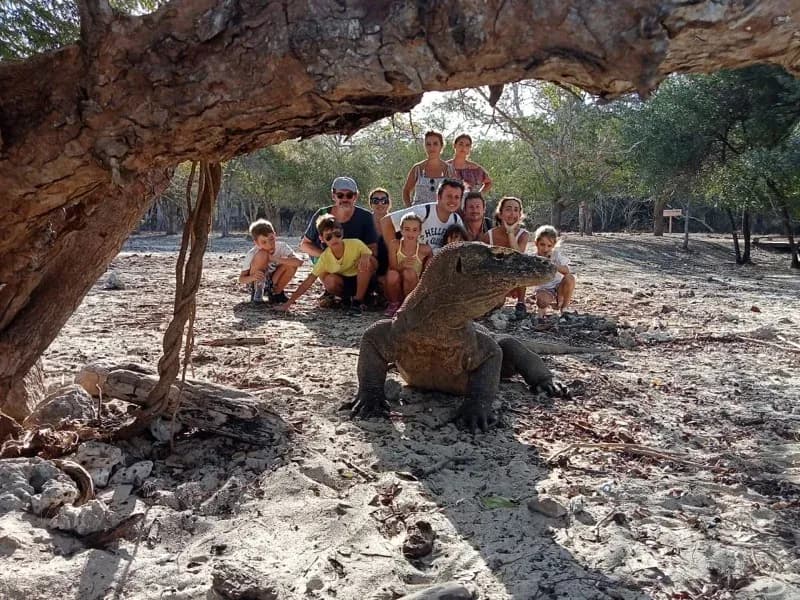
The dragon trek lasts 90 minutes in morning coolness. Your ranger-guide tracks fresh prints in dust, leads you to a waterhole where a three-meter male lounges, forked tongue testing air for carrion scent. His scales are the color of dried blood and ancient stone.
Afternoon brings Pink Beach snorkeling—coral gardens at 3-8 meters depth, hawksbill turtles grazing, perhaps a blacktip reef shark patrolling the drop-off. The sand genuinely carries rose pigment from microscopic foraminifera, crushed and blended with white coral fragments.
Evening anchorage in a protected bay. The generator quiets at 10:00 PM. You fall asleep to water lapping against wooden hull, stars unobscured by any light pollution, the Southern Cross rotating slowly overhead.
Padar's viewpoint requires 800+ stairs. Komodo dragon treks traverse uneven terrain in tropical heat. Snorkeling in currents at Manta Point demands competent swimming fitness. Be honest about your capabilities when booking—some Komodo tour packages offer modified itineraries for less mobile guests.
July-August brings strongest winds and most reliable manta encounters, but also choppiest crossings. November offers calmer seas but reduced manta sighting probability. January-March risks itinerary disruption from monsoon systems.
The quoted trip price rarely represents total expenditure. Budget additionally for:
For peak season departures (June through September), I recommend securing your reservation 8-12 weeks ahead. Premium vessels with limited cabins—particularly those with master suites or dedicated dive facilities—often sell out 3-4 months in advance. Shoulder season (April-May, October) offers more flexibility; 3-4 weeks typically suffices. The December-January holiday period requires similar advance planning to peak summer months. Last-minute availability does occur due to cancellations, but relying on this strategy risks missing your preferred dates entirely.
Indonesian liveaboard operators typically implement tiered cancellation structures. Cancellations 30+ days before departure usually receive full deposit refund minus administrative fee (5-10%). Between 14-30 days, expect 50% deposit retention. Within 14 days, most operators retain the full deposit or apply it as credit toward future travel. Force majeure provisions (natural disaster, medical emergency with documentation) may override standard terms. KomodoExplorer's booking terms include COVID-adapted flexibility allowing date changes without penalty up to 7 days before sailing if health protocols disrupt travel.
Absolutely—open trips originated specifically to accommodate individual travelers seeking shared adventure. Solo travelers comprise approximately 40% of our departures. Single cabin supplements apply on some vessels (typically 50-75% of per-person rate), though many Phinisi operators offer cabin-share programs pairing same-gender solo travelers to avoid supplement charges. The communal dining and activity structure naturally facilitates group bonding; I've witnessed countless friendships and several marriages originate from open trip encounters. Solo travelers concerned about social dynamics should inquire about departures with established group bookings where they can join an existing friend group rather than a fully unknown cohort.
International visitors require passport presentation for park permit processing—photocopies are not accepted. The permit itself is purchased through your operator and included in most package pricing, but you must present original passport during the ranger station check, typically on Komodo or Rinca Island. Domestic Indonesian travelers may use KTP (national ID). Divers must present certification cards for sites requiring advanced qualifications. I recommend waterproof document storage; salt spray and sudden rain are constants aboard Phinisi vessels.
Beyond documentation checks mentioned earlier, verify physical presence. Legitimate operators maintain offices in Labuan Bajo—request a video call showing their harbor location, or visit in person if arriving early. Cross-reference their business name with the Indonesian Tourism Ministry's registered operator database. Check whether they belong to ASITA (Indonesian Tour and Travel Agencies Association) or GAN (Indonesian Liveaboard Association). Be particularly cautious of operators offering dramatically below-market pricing—I've seen "too good to be true" offers where vessels lacked proper insurance or crew worked without contracts. At KomodoExplorer, we conduct annual on-site inspections of every Phinisi in our network, verifying both documentation and actual operational standards.
Mastering cara booking open trip komodo transforms an overwhelming marketplace into a navigable path toward one of Southeast Asia's most extraordinary marine experiences. The process demands attention to detail—verifying credentials, understanding timing considerations, selecting appropriate cabin and itinerary configurations—but rewards that diligence with access to landscapes and wildlife found nowhere else on Earth.
Ready to secure your place aboard a traditional Phinisi yacht? Browse our curated open trip departures for 2026, filter by date, vessel class, and activity focus, or contact our Labuan Bajo-based team for personalized recommendations. Whether you're drawn by dragon encounters, manta ballet, or simply the profound silence of sailing through island-studded seas, your Komodo story begins with a single, well-informed booking decision.