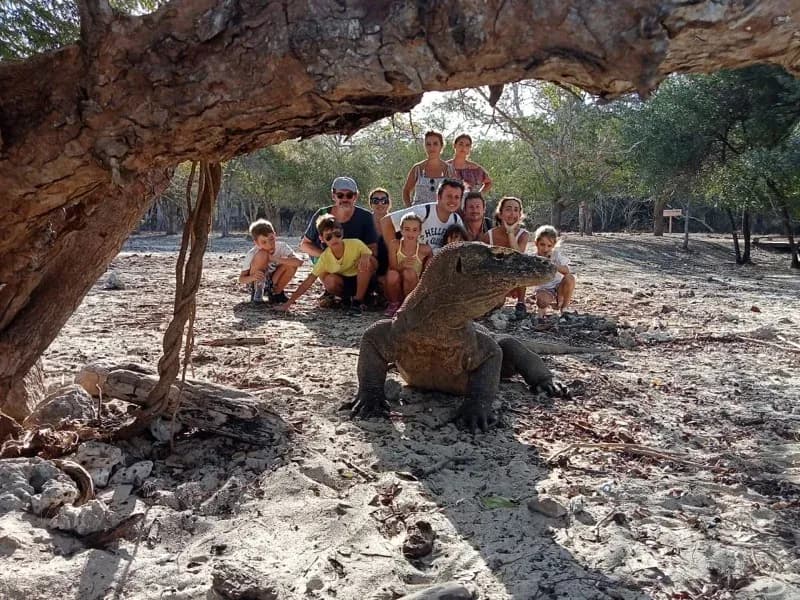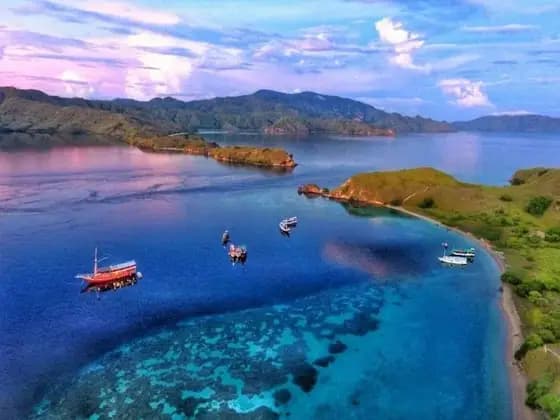

A liveaboard vs day trip Komodo decision hinges on one question: do you want to skim the surface of the Komodo National Park, or do you want to live inside its rhythms? Day trips from Labuan Bajo deliver the headline sights—Komodo dragons, Pink Beach, perhaps a manta if the tides align—on a compressed schedule. Liveaboard cruises, by contrast, unlock dawn patrols at Manta Point when the plankton blooms draw oceanic mantas in numbers, sunset approaches to Padar Island's summit without the midday hordes, and the profound silence of anchoring in a bay where the only light pollution is the Milky Way. The right choice depends on your budget, travel style, physical stamina, and what you're willing to trade for depth of experience.
| Factor | Day Trip Komodo | Liveaboard Cruise |
|---|---|---|
| Cost per person | $85–$180 USD | $350–$1,200+ USD |
| Duration | 10–12 hours | 2–4 nights (typical) |
| Islands visited | 3–5 (Rinca/Padar/Komodo + beaches) | 10–15+ including remote sites |
| Manta viewing odds | Moderate (tide-dependent, single window) | High (multiple windows, dawn/dusk) |
| Komodo dragon access | Midday (hottest, least active) | Early morning (cooler, more active) |
| Sunrise/sunset access | None | Daily, at signature viewpoints |
| Comfort level | Basic (speedboat seating, packed lunch) | Premium (cabins, chef meals, dive deck) |
| Best for | Budget travelers, tight schedules, families with young children | Divers, photographers, couples, adventure seekers |
Day trips from Labuan Bajo typically run $85–$180 USD per person depending on vessel type and inclusions. A shared speedboat with 15–20 passengers sits at the budget end; a semi-private speedboat with 8–10 guests and better food pushes toward $150–$180. This price generally covers: national park entrance fees (currently $15 USD weekdays, higher weekends), guide services, lunch, and snorkeling gear. What it rarely covers: Komodo dragon ranger fees on Rinca or Komodo Island ($8 USD), tips, or rental of quality dive equipment.
The per-day economics are straightforward but deceptive. You're paying for intensity, not breadth. Twelve hours of bouncing between sites means roughly 40% of your day is transit—Labuan Bajo to Komodo Island is 2.5–3 hours each way by standard speedboat. That transit time chews into your budget without adding experience.
Liveaboard pricing operates on a different calculus. Budget shared cabins on a standard Phinisi start around $350–$450 USD for a 2-night/3-day itinerary. Mid-range Komodo liveaboard packages with private cabins and dedicated dive guides run $600–$900 USD. Luxury private yacht charter Komodo experiences with en-suite bathrooms, air conditioning, and gourmet kitchens scale from $1,200–$3,000+ USD per person depending on group size and vessel.
The per-day rate typically drops with longer itineraries. A 3-night/4-day trip might average $280/day; extend to 5 nights and you're closer to $220/day. This includes all meals, unlimited drinking water, coffee, tea, guide services, snorkeling equipment, and sleeping aboard. National park fees are usually additional but collected upfront.
Insider tip from our operations desk: The sweet spot for value is the 3-night/4-day itinerary. It captures the full Padar sunrise, two manta tide windows, a dawn Komodo dragon walk, and enough buffer for weather delays without the diminishing returns of very long trips.
A typical day trip Komodo komodo dragon itinerary departs Labuan Bajo at 07:30, reaches Komodo or Rinca by 10:30, and faces an immediate constraint: ranger-led walks are scheduled in blocks. The midday slot—when you've arrived—is thermally brutal. Dragons seek shade, visibility for photography is harsh, and the 30–45 minute walk feels rushed. By 12:30 you're back on the boat, lunching en route to Pink Beach or Manta Point.
Manta Point arrival typically hits at 14:00–15:00. Here's the operational reality our captains track daily: mantas feed most predictably on incoming tides when plankton concentrates. That tide window might be 11:00 or 16:00. Day trips are locked into whatever approximation they can manage. I've watched dozens of day-trippers circle Manta Point for 45 minutes, see nothing, and retreat to Padar for a hurried hike before the 3-hour return leg.
Padar Island's iconic viewpoint? You're climbing in 13:00 heat with 200 other people, the ridge a conveyor belt of selfie sticks. The light is flat, the shadows gone, the magic diluted.
Liveaboard cruises rewrite this script entirely. At 05:30, while day-trip boats are still fueling in Labuan Bajo, you're already anchored off Padar. The climb begins in blue-hour coolness, the only sounds your boots on volcanic scree and the distant bark of a deer. At the summit by 06:15, you watch the three-bay panorama ignite—turquoise, charcoal, rose-gold—without another soul in frame. This is the experience that populates Komodo photography tours portfolios.
Manta Point becomes a strategic operation, not a lottery. Our dive masters monitor tide tables obsessively. A 3-night itinerary allows us to hit Manta Point at optimal tide on two separate days, plus alternative sites like Makassar Reef (Manta Alley) if conditions shift. The difference in encounter quality is stark: day trips average 0.3 manta sightings per visit in our logs; liveaboard guests average 2.4 encounters across a typical itinerary, with multiple individuals per encounter.
The sensory texture of liveaboard life accumulates. The smell of clove cigarettes and grilling fish from a distant fishing camp at 22:00. The phosphorescence disturbed by your night swim, each stroke painting green constellations. The particular silence of a Phinisi at anchor—no engine drone, just the creak of teak and the slap of water against the hull. These are not accessible on any day trip Komodo komodo dragon package.
Day trip vessels range from basic fiberglass speedboats to more comfortable catamarans. Seating is bench-style, often with limited shade. Toilets are typically absent or basic; lunch is eaten from plastic containers on a rocking deck. For the iron-stomached and adaptable, this is manageable. For anyone prone to seasickness, the 6+ cumulative hours of open-water pounding can be genuinely miserable.
There is no escape from the elements. Sun exposure is total. When afternoon squalls hit—a regular occurrence December through March—you're exposed and often returning directly into them.
The Phinisi yacht tradition brings genuine comfort to remote waters. Even budget liveaboards offer: shaded lounge decks with bean bags and day beds, indoor dining saloons, private or semi-private sleeping quarters with fans or AC, and fresh-water showers. The food transitions from survival to experience—grilled mahi-mahi with sambal matah, tempeh manis, tropical fruits, and proper coffee.
Mid-range vessels add: en-suite bathrooms, individual AC controls, charging stations in cabins, and equipment rinse tanks. Luxury luxury yacht charter Indonesia offerings include: king beds, spa services, dive compressors, underwater camera stations, and curated wine lists.
The comfort differential matters most for multi-day exposure. A sunburned, seasick traveler on day two of a liveaboard is still traveling; a day-trip passenger with the same condition is enduring the return leg and writing off the experience.
Solo travelers find asymmetric advantages. Day trips offer easy social mixing—shared boats force interaction—but limited depth. Liveaboards, particularly Komodo liveaboard for solo travelers, create genuine community through shared meals, night dives, and the intimacy of small-group living. Our 8-cabin vessels carry maximum 16 guests; many sail with 10–12. The solo supplement (typically 25–50% for private cabin) is the main barrier, though some operators offer cabin-share programs.
For romantic travel, the comparison is nearly moot. A Komodo honeymoon cruise delivers privacy, shared awe, and the particular intimacy of remote anchorage sunsets. Day trips crowd couples into group dynamics and logistical stress. The premium for private cabin or private yacht charter Komodo pays dividends in memory quality.
This is where day trips can legitimately win. Children under 8 struggle with liveaboard constraints: limited running space, safety protocols around dive decks, and the disruption of sleeping in unfamiliar environments. A well-chosen day trip—shorter duration, familiar hotel return, beach time—keeps everyone functional.
That said, families with children 10+ who are strong swimmers often thrive on liveaboards. The educational density—marine biology in real-time, navigation concepts, cultural exchange with crew—exceeds any land-based program. We recommend family-friendly liveaboard Komodo options with dedicated guide attention and flexible scheduling.
Most international visitors route through Bali, then connect to Labuan Bajo (LBJ). The flight is 1 hour 10 minutes on Garuda Indonesia, Lion Air, or Batik Air, with 6–10 daily departures. This connection adds roughly $80–$150 USD round-trip and a half-day of transit each direction.
For day trips, this means: you need a minimum one-night stay in Labuan Bajo before and after your trip (hotel costs: $25–$150/night). The effective trip duration extends by two days for a single day of park access. The economics tilt sharply toward liveaboard if you've already invested in reaching Flores.
Critical operational note: Morning flights from Bali are frequently delayed 1–3 hours by weather, especially November–March. A 06:00 Bali departure scheduled to reach Labuan Bajo by 07:30 might land at 10:00, eliminating same-day day trip departure. Liveaboard itineraries build buffer; day trips do not.
Increasingly, travelers are positioning Labuan Bajo as a dedicated destination, particularly combining with Komodo and Raja Ampat itinerary planning. Direct access eliminates Bali buffer and allows immediate embarkation. For liveaboard guests, this means boarding by 09:00 and reaching first dive sites by midday; for day-trippers, it means a full operational day without transit penalty.
This period brings unreliable conditions: afternoon thunderstorms, wind shifts, and occasional swell that cancels northern sites. Day trips are most affected—operators cancel roughly 15–20% of departures during peak monsoon, and running trips face shortened itineraries or substituted sites. The 3-hour open-water return to Labuan Bajo in building seas is genuinely uncomfortable.
Liveaboards maintain operational flexibility. A Phinisi can reposition to southern sheltered bays (around Rinca, Nusa Kode) when northern sites blow out. Extended itineraries absorb weather days. Our captains maintain satellite weather updates and adjust routes in real-time—capability no day-trip speedboat possesses.
Prime conditions favor both formats, but liveaboard advantage persists. July–August brings peak crowds; day-trip sites face queuing for dragon walks and viewpoint access. Liveaboards access secondary sites—Pillarsteen, Siaba Kecil, Gili Lawa Laut—that remain uncrowded even in high season.
Manta rays (Mobula alfredi and occasional Mobula birostris) operate on tidal feeding patterns. At Manta Point, incoming tides concentrate plankton against the cleaning station reef; outgoing tides can trigger feeding along drift corridors. Water temperature, moon phase, and recent rainfall all modulate presence.
Day trips access one, maybe two tide windows with no flexibility. Liveaboards with multiple days and onboard dive computers can chase optimal conditions across sites. Our records show: liveaboard guests in 3-night itineraries have 94% manta encounter probability; day-trip guests, 61%.
Varanus komodoensis are most active in cool morning hours (06:00–09:00) and late afternoon (16:00–18:00). Midday finds them lethargic in shade, often distant from trails. Ranger schedules theoretically accommodate this, but operational realities—day-trip arrival times, ranger shift structures—mean most visitors see sedentary animals.
Liveaboard guests on dawn patrol reach ranger stations by 07:00. Dragons are hunting, interacting, thermoregulating. The behavioral observation quality transforms from "I saw one" to "I watched a dragon stalk a deer for twenty minutes." For photographers, the difference in subject alertness and light quality is decisive.
Choose a day trip Komodo komodo dragon package if:
Choose a liveaboard cruise if:
For most travelers who have already invested in reaching Labuan Bajo, yes. The per-experience cost of a liveaboard vs day trip Komodo comparison favors liveaboards when you calculate effective hours in quality conditions. A $150 day trip delivers perhaps 4 hours of optimized activity; a $750 3-night liveaboard delivers 40+ hours, with dawn/dusk access impossible otherwise. The value proposition strengthens with diving interest, photography priority, or desire for romantic/private experience.
Yes, but with significant probability reduction. Day trip Komodo komodo dragon viewing is reliable for physical sightings—dragons are present on both Komodo and Rinca islands—but behavioral quality is poor due to midday timing. Manta encounters are chance-dependent; roughly 60% of day trips report sightings, often brief and distant. Liveaboard itineraries stack odds through multiple attempts and optimal timing.
Two nights/three days is technically viable but tight. Three nights/four days captures the complete signature experience: Padar sunrise, two manta windows, dawn dragon walk, and sufficient buffer for weather. Four nights/five days allows exploration of remote southern sites (Nusa Kode, Horseshoe Bay) where dragon density exceeds northern areas and human presence approaches zero.
Prevention outperforms treatment. We recommend scopolamine patches (available in Labuan Bajo pharmacies), meclizine, or ginger supplements starting 12 hours before boarding. Cabin location matters: midship, lower deck minimizes motion. Our Phinisi yacht designs include stabilizing hull characteristics absent from speedboats. Once aboard, acclimation typically occurs within 24 hours; the first night is usually the challenge.
Bali-based operators offering "Komodo day trips" universally involve flights or overnight ferries—there is no practical direct boat service. These are packaged logistics, not genuine Bali-origin experiences. For liveaboards, some Bali to Komodo liveaboard repositioning cruises operate seasonally (typically October–November, April–May), but these are 7–10 day commitments, not shortcuts. Labuan Bajo embarkation remains the efficient choice for focused Komodo access.
Ready to commit to the depth only a liveaboard provides? Browse our curated Komodo liveaboard collection or inquire about a private yacht charter Komodo tailored to your group size and interests. Our operations team tracks daily conditions across the national park and will match you to the vessel and itinerary that transforms your Komodo cruise vs tour decision from compromise into certainty.