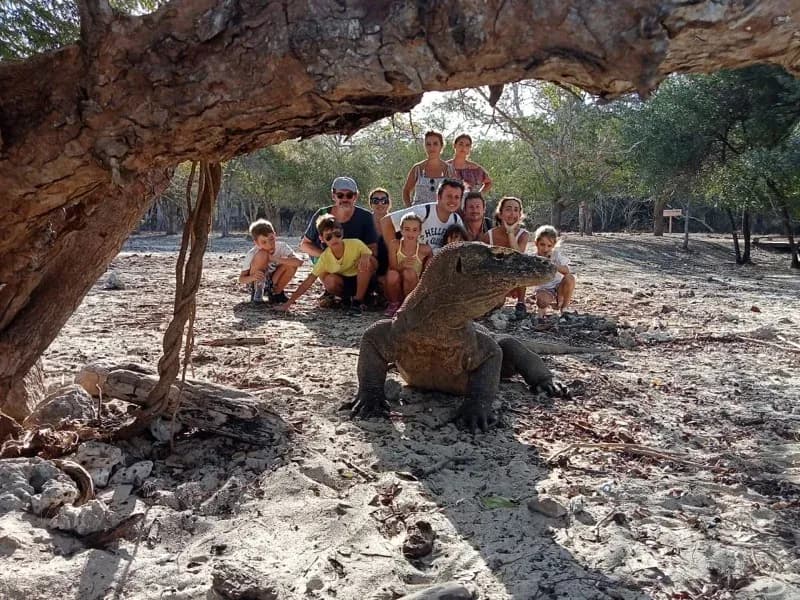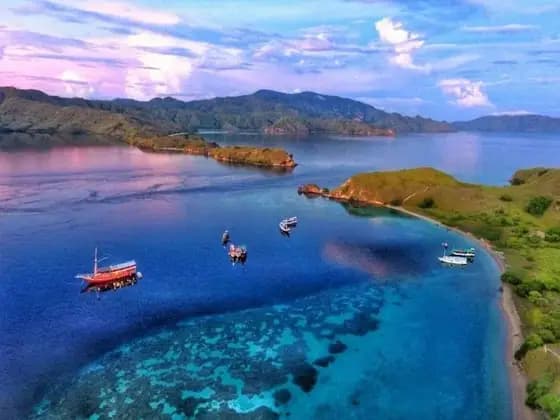
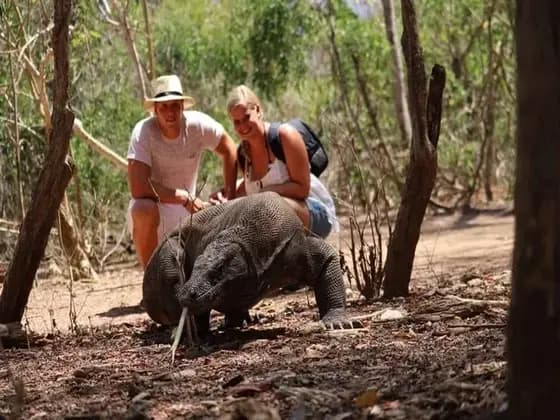
Direct answer: Komodo National Park is generally safe for tourists who book licensed operators, trek only with rangers, keep distance from dragons, and respect weather calls on the water. The biggest real risks are preventable: getting too close to wildlife, underestimating currents while snorkelling, heat dehydration, and skipping travel insurance for a remote island region.
Komodo’s reputation mixes two stories: the prehistoric predator on land, and the emerald seas that look calm until a current runs. Both can be managed. This guide separates myth from operational reality so you can plan with clear eyes — then pick the right open trip, private charter, or dive cruise for your group.
Komodo dragons are wild apex predators. Park management treats them that way. On Komodo and Rinca, guided ranger treks are mandatory. You walk designated paths, you do not feed animals, and you do not chase photos at arm’s length. Rangers carry forked sticks as a deterrent tool and know animal behaviour at popular viewpoints.
For visitors who follow those rules, the day-to-day experience is controlled: short walks, photo stops, clear briefings. Incidents that make international headlines almost always involve people who left the protocol — approaching nests, walking alone, or treating dragons like zoo animals.
If your priority is lower walking intensity, ask your operator for Rinca or shorter loop options and avoid midday heat. Pair the land day with sea time rather than forcing a long trek in peak sun.
Marine risk in Komodo is often higher than dragon risk for casual travellers. Strong currents appear at famous sites (including manta cleaning stations and some reef passes). Good operators:
Wear a life jacket if you are not a confident swimmer. Reef shoes help on rocky landings. Never free-dive alone after boat drinks, and treat “just a quick snorkel” with the same respect as a dive briefing.
On deck, wet wood is slippery. Hold rails when the boat is underway. Cabins on traditional phinisi are charming but stairs can be steep — move slowly at night.
Labuan Bajo has clinics and a hospital suitable for many routine issues; it is not a full tertiary trauma centre. Serious diving accidents or major trauma may require medevac to Bali or further. That is why insurance matters.
Practical health habits that prevent most trip-spoilers:
Seasickness is common on multi-day boats. See prevention tactics in our seasickness guide and pack remedies you already tolerate.
Dry season (roughly April–November for many routes) usually means calmer seas and clearer water; wet season brings more rain, wind variability, and occasional cancelled day trips. Operators who refuse to sail into unsafe conditions are protecting you. Build buffer days in Labuan Bajo if your international flight is tight. Seasonal context: best time to visit Komodo.
| Traveller type | Safer default | Why |
|---|---|---|
| First-timers, mixed swim skill | Shared open trip with strong guide ratio | Structured schedule, many eyes on water |
| Families / multi-gen | Private charter | Control pace, rest stops, kid-friendly bays |
| Certified divers | Dive cruise with DM briefings | Site matching to skill, tanks/safety protocol |
| Solo travellers | Open trip or well-reviewed liveaboard | Built-in social group; avoid unlicensed “cheap full boat” offers |
Verify that park tickets / SiORA-style access are handled correctly (entrance fee overview) so you are not stuck in a grey-area landing.
Red flags: pressure to skip ranger fees, no life jackets visible, captain drinking, insistence on swimming in clearly running current with beginners, no written cancellation terms, cash-only full prepay to a personal account with no company trail. Price shopping is fine; safety shopping is mandatory. Cross-check inclusions so “cheap” is not missing mandatory park costs (what’s included).
Komodo is not a theme park, and it is not a war zone. It is a managed wilderness plus a working maritime industry. Tourists who hire licensed crews, obey rangers, respect the sea, and carry proper insurance routinely have safe, life-highlight trips. If you want a fleet curated for verified boats and transparent booking paths, start at KomodoExplorer and compare open trip vs private charter against your group’s swimming and walking comfort.
Serious attacks on guided tourists are extremely rare. Rangers require minimum distances, forbid feeding, and escort all treks on Komodo and Rinca. Risk rises when people ignore barriers or hike alone off-trail.
Many families visit successfully. Children must stay close to adults and rangers; very young toddlers may find long treks difficult. Choose boats with family-friendly pacing and confirm age guidance with your operator.
Licensed phinisi and speedboats used by established operators carry safety gear and experienced captains. Weather can cancel or delay departures — that is a safety feature, not a failure.
Yes. Choose a policy that covers boat travel, snorkelling/diving if relevant, and medical evacuation to Bali or beyond. Komodo is remote; clinic care in Labuan Bajo is limited for major trauma.
Labuan Bajo is a small tourist gateway. Use normal travel sense (secure bags, licensed taxis/transfers). Violent crime against tourists is uncommon compared with major cities.